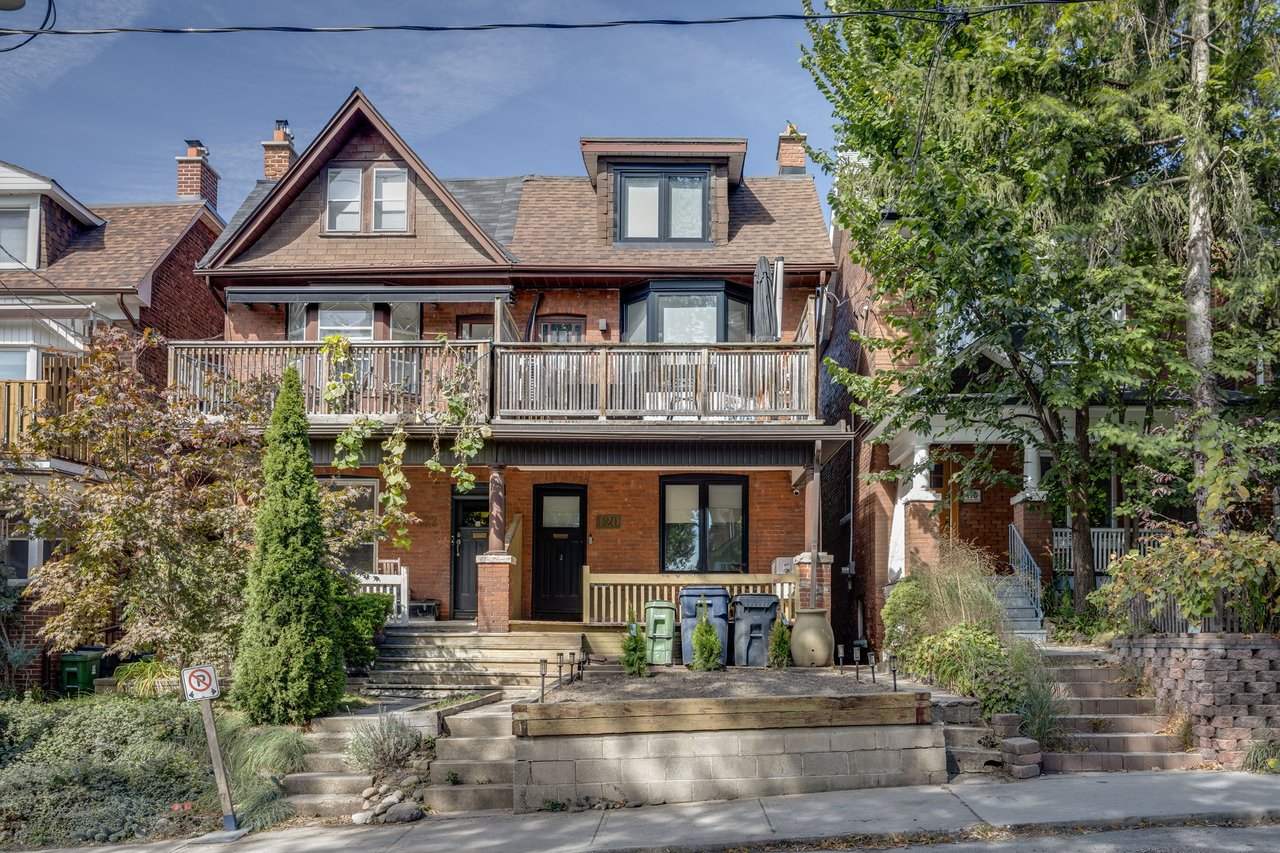
Should You Add Your Kids to Title?
Buyer Advice Dave Dubbin September 1, 2026
Buyer Advice Dave Dubbin September 1, 2026
Should you add your adult children to the title of your house? Usually no. The saving people are chasing is Ontario's Estate Administration Tax at 1.5 per cent, and the costs they are not counting include a capital gains bill on the child's share, exposure to that child's creditors and divorce, and a loss of control over your own home. In a typical Etobicoke example the tax created is roughly four times the probate saved. There are situations where it makes sense. They are narrower than the kitchen table version suggests.
Weighing this because you are thinking about downsizing or helping a child buy? Book a call first. There are usually cleaner ways to get where you are going.
The standard disclaimer, and we mean it: we are brokers, not lawyers or accountants. This is how the trade-off is generally shaped, not advice about your family. Anyone who tells you the answer without looking at your cost base, your will and your child's circumstances is guessing.
The pitch is simple. Put the house in joint tenancy with your daughter. On your death it passes to her by right of survivorship, outside the estate, so no probate on the house. On a $1,400,000 Etobicoke home that is about $21,000 of Estate Administration Tax avoided. Real money.
The trouble is that you have not made one change. You have made five, and four of them are working against you.
In Pecore v. Pecore, the Supreme Court of Canada held that when a parent transfers property gratuitously to an independent adult child, the starting presumption is a resulting trust. Translated: the law assumes the child is holding it for the parent's estate, not receiving a gift, unless there is evidence the parent intended a gift.
So the joint tenancy that was supposed to sidestep the estate can end up litigated inside it, with the other siblings arguing the house belongs to everyone. Families have spent more on that fight than the probate would ever have cost. It is fixable with a clear declaration of intent drafted at the time, which is exactly the sort of thing that gets skipped when the plan is done to save a fee.
If you genuinely transfer half the beneficial ownership, the Canada Revenue Agency treats it as a disposition of that half at fair market value. If the house is your principal residence, that disposition is likely sheltered today, so nothing appears to happen. The bill shows up later, because from that day forward half the growth belongs to a person for whom the house is probably not a principal residence.
The trade | Amount |
|---|---|
Home value when the child goes on title | $1,400,000 |
Sold ten years later for | $2,000,000 |
Growth during that period | $600,000 |
Child's 50 per cent share of the growth | $300,000 |
Capital gains tax on the child's share | $80,280 |
Estate Administration Tax avoided on the house | about $21,000 |
Illustrative. Assumes the child does not live in the home and cannot claim it as a principal residence, an effective capital gains rate of 26.76 per cent at Ontario's top marginal bracket, and no change in the inclusion rate. Probate figure is 1.5 per cent of the home's value at death.
You spent roughly $80,000 to save roughly $21,000. Worse, the two amounts land on different people. The estate saved the probate. The child pays the tax.
Once your child is on title, their share can be reached by their creditors. If they are sued, go bankrupt, or guarantee a business loan that fails, a trustee can apply to have their interest realized. If their marriage ends, the interest is an asset in that proceeding. None of this reflects on your child. It reflects on the fact that a house is a poor place to store somebody else's legal risk.
You cannot sell or refinance without their signature. If you decide at 78 that you want to downsize to a condo on The Queensway, you need your co-owner to agree and to sign. Most will. Some are overseas, some are unwell, and some have an opinion about the plan. If more than one child is on title, you have multiplied the problem.
Three that pair well with this one:
A transfer to a family member for no consideration is generally exempt from Ontario land transfer tax under the natural love and affection provisions, and the parties file an affidavit saying so. That works when there is no mortgage.
If there is a mortgage on title and your child takes on a share of it, the assumed debt is consideration, and land transfer tax becomes payable on that amount. In Toronto you pay the municipal land transfer tax as well, which roughly doubles it. There is no parent to child exemption that fixes this the way the spousal rules do. Plenty of people have discovered this at the lawyer's office on signing day.
A few situations, and they share a feature: the child's interest is real and intended, or the arrangement is properly documented as not a transfer at all.
If the goal is reducing probate, there are tools that do not hand away half your house. Multiple wills can keep assets that do not require probate out of the probated estate. Beneficiary designations on registered accounts and insurance move those assets directly. Trusts do more, at more cost and complexity. Which combination fits is a question for an estate lawyer, and the fee for that advice is a rounding error next to the numbers in the table above.
Mostly the size of the gain. If the house has barely appreciated since the child went on title, the capital gains cost is small and the probate saving may well win. If Ontario changed the Estate Administration Tax, or the capital gains inclusion rate moved from its current 50 per cent, the comparison shifts. And if the family's real problem is a sibling who will contest everything, the calculation stops being about tax at all.
Most of the time this question is really a downsizing question wearing a disguise. If you are trying to help a child into the market, or set up a move in a few years, book a call and we will map out what the Etobicoke house is worth, what the move would net you, and where the timing lands. Then take that to your lawyer, who will thank you for showing up with real numbers.
Dave Dubbin
Real Estate Expert
Dave Dubbin & Associates
Real Estate Broker for Etobicoke and Toronto
Sotheby's International Realty, Canada
Stay up to date on the latest real estate trends.
Liberty Villiage
Etobicoke Lifestyle & Community
Liberty Villiage

Buyer Advice
Buyer Advice
Market Insight

Buyer Advice

Community Feature

Market Insight

DAVE DUBBIN & ASSOCIATES
3109 BLOOR ST W #1 TORONTO ON M8X 1E2 CANADA