The Principal Residence Exemption: What It Covers and Where People Lose It
Buyer Advice Dave Dubbin August 21, 2026
Buyer Advice Dave Dubbin August 21, 2026
The principal residence exemption lets you sell the home you live in without paying tax on the capital gain, but it is not automatic, it is not unlimited, and it is not one per person. It is one property per family unit per year, you have to designate it on your tax return, and there are four common situations where owners quietly lose part of it. This is the plain language version of how it works in 2026.
Thinking about selling and want to know what the gain would actually look like? Start with a current valuation of your home here.
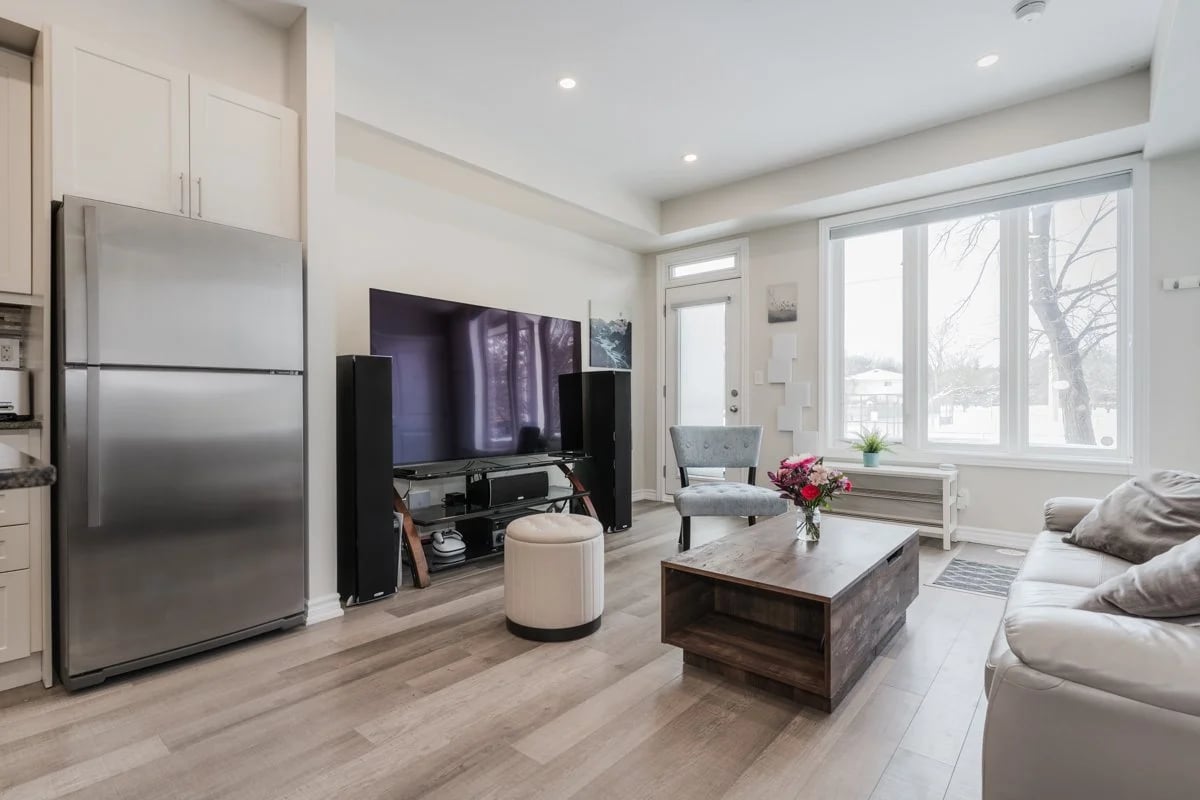
Photo: Unsplash
One thing up front. We are real estate brokers, not accountants or tax lawyers. Everything below is general information about how the rules are written. Before you act on any of it, run your specific numbers past a CPA. The cost of an hour with one is trivial next to the cost of getting this wrong.
The exempt portion of your gain is calculated as:
Exempt gain = Total gain x (1 + years designated as principal residence) / (years owned)
If you owned the home for 16 years and it was your principal residence for all 16, the fraction is 17 over 16, which is capped at 1, and the whole gain is sheltered. The fraction only starts to bite when some of your ownership years were not principal residence years. That happens more often than people expect, usually because a property spent time as a rental.
Say you bought a place for $600,000, sold it for $1,000,000, and had $30,000 of selling costs. Your gain is $370,000. You owned it 16 years and lived in it for the first 10, then rented it out for six without filing any election.
Proceeds of disposition | $1,000,000 |
Less adjusted cost base | $600,000 |
Less selling costs | $30,000 |
Capital gain | $370,000 |
Years owned | 16 |
Years designated | 10 |
Exemption fraction | (1 + 10) / 16 = 68.75% |
Exempt gain | $254,375 |
Taxable capital gain (before inclusion rate) | $115,625 |
Amount added to income at the 50% inclusion rate | $57,812 |
Illustration only. The capital gains inclusion rate is 50% for 2026; the proposed increase to two thirds was cancelled in March 2025 and never became law. Figures current as of August 21, 2026.
Notice what the "1 plus" did. It bought back one full year, worth about $23,000 of exempt gain in this example. That single extra year exists so that people who buy and sell in the same calendar year are not penalized, and it quietly rescues a lot of returns.
For dispositions after October 2, 2016, you only get the extra year if you were resident in Canada during the year you acquired the property. If you were a non resident throughout the year of purchase, the fraction becomes years designated over years owned, with no bonus year. If you bought while living abroad and later moved back, flag it for your accountant.
Even when the entire gain is exempt, you must report the sale on Schedule 3 of your return. If some years were not designated, you also file Form T2091(IND). Skipping the report is where people get hurt: the penalty for failing to report a principal residence disposition is $100 per complete month of delay, to a maximum of $8,000. That is a penalty for paperwork on a sale that may have owed zero tax.
If you are working through a sale or a rental conversion, read these next:
When you move out and rent your home, the Income Tax Act treats that as a deemed disposition at fair market value, which means the tax system pretends you sold it even though nothing changed hands. A subsection 45(2) election lets you elect not to have that change of use apply, and it can keep the property as your principal residence for up to four additional tax years even though you no longer live there. The election has conditions, most importantly that you cannot claim capital cost allowance, the annual depreciation deduction on the building, during the years the election is in force. Claim the depreciation and you lose the election.
This is a genuine trade off, not a free option. Capital cost allowance lowers your rental income tax bill every year you claim it. Giving it up to preserve four years of exemption is a bet that the sheltered gain will be worth more than the deductions. On a Toronto property that has appreciated meaningfully, it usually is. On one that has been flat since 2022, it may not be. Run both.
The exemption covers the housing unit plus the land that can reasonably be considered to contribute to its use and enjoyment as a residence. Above half a hectare, roughly 1.24 acres, the excess is presumed not to contribute unless you can show it was necessary. This almost never comes up on a Toronto lot. It comes up constantly on rural and estate properties, and on severable land.
Since 2023, a residential property sold within 365 consecutive days of acquisition is deemed to be inventory rather than capital property. The full profit is business income, capital gains treatment is gone, and the principal residence exemption is denied outright. Losses are deemed nil, so you cannot even claim the downside. There are exceptions for specific life events, including death, breakdown of a marriage or common law partnership, serious illness or disability, a change in household size, an employment relocation, and a few others. Intention does not save you. Living in the property does not save you. Only the listed exceptions do.
A family unit, meaning you, your spouse or common law partner, and unmarried minor children, can designate only one property per year. If you own a house and a cottage and both have appreciated, you have to choose which years go where. The optimal split is not obvious and depends on the gain per year of ownership on each property, not the total gain. This is a real optimization problem and it deserves an accountant with a spreadsheet.
The exemption is one of the largest tax expenditures in the country and it gets debated every few years, usually as a proposal to cap the sheltered amount or add a surtax on very large gains. Nothing of the kind has been enacted, and the current government's most recent move on capital gains went the other direction when it cancelled the inclusion rate increase in March 2025. If a cap ever arrives it would most likely apply prospectively, but nobody should own a home on the assumption that the rule is permanent. Date stamp your planning and revisit it after each federal budget.
If you are deciding whether to sell now or rent for a few years first, that choice has a tax answer and a market answer and they do not always agree. Book a call and we will lay out what the property is likely to fetch today, what the holding case looks like on current rents, and what your accountant will need from us either way. If the numbers say hold, we will tell you to hold.
Dave Dubbin
Real Estate Expert
Dave Dubbin & Associates
Real Estate Broker for Etobicoke and Toronto
Sotheby's International Realty, Canada
Stay up to date on the latest real estate trends.
Liberty Villiage
Etobicoke Lifestyle & Community
Liberty Villiage

Buyer Advice
Buyer Advice
Market Insight

Buyer Advice

Community Feature

Market Insight

DAVE DUBBIN & ASSOCIATES
3109 BLOOR ST W #1 TORONTO ON M8X 1E2 CANADA