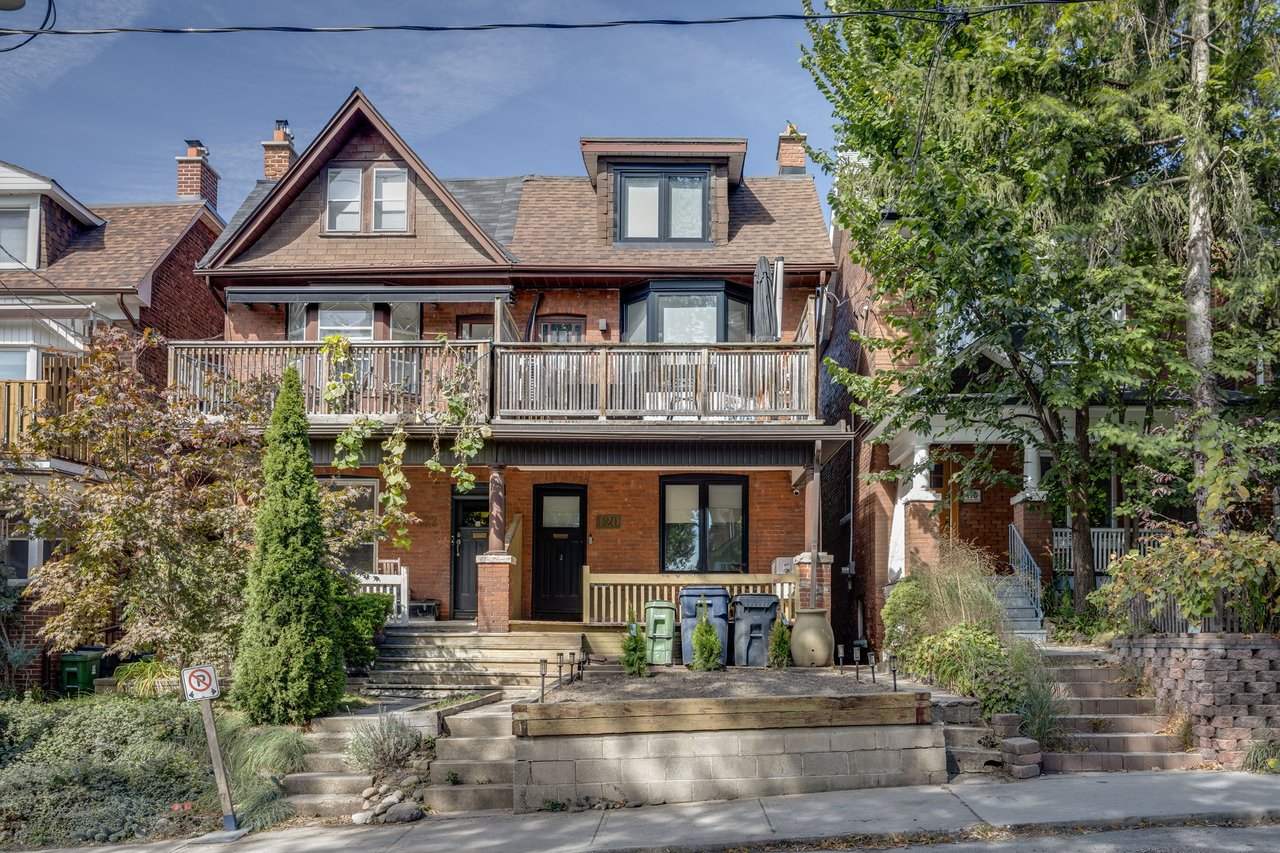
Multiple Representation and TRESA: What Happens When One Brokerage Has Both Sides
Buyer Advice Dave Dubbin August 28, 2026
Buyer Advice Dave Dubbin August 28, 2026
Multiple representation means one brokerage is on both sides of the same deal, and under TRESA it is legal only if everyone involved gets written disclosure and gives informed written consent. Here is the part people miss. The moment you consent, your agent has to stop advising you on price and on terms. You keep the same person, you lose the advocacy. That trade is the entire decision, and it is worth understanding before an offer night, not during one.
Photo: Unsplash
Buying or selling in Etobicoke or Toronto and want to know exactly who is representing whom? Get in touch and we will walk you through the paperwork line by line.
Both agreements are with the brokerage, and which one you are offered is the brokerage’s choice, not your agent’s.
Brokerage representation. The brokerage and every agent working there owe you the same duties. Undivided loyalty, from all of them. If the duties get altered for one client, they get altered for everybody in the office.
Designated representation. The agreement names one or more agents as your designated representative. That person represents your interests. The brokerage and every other agent there are neutral parties, and your confidential information, what you would really pay, why you are really selling, stays with your designated representative and goes nowhere else.
That difference is the whole ballgame, because it changes when multiple representation kicks in at all.
The situation | Under brokerage representation | Under designated representation |
|---|---|---|
The brokerage has the seller and a buyer, each with a different agent | Yes, multiple representation | No, each designated representative keeps advising their own client |
The same agent has the seller and the buyer | Yes | Yes |
The brokerage has two competing buyers on the same property, different agents | Yes, even if another brokerage holds the listing | No |
The same agent has two competing buyers on the same property | Yes | Yes |
One client signed a brokerage agreement, the other signed a designated agreement | Yes | Yes |
Source: Real Estate Council of Ontario, Bulletin 2.2 Representation. Summarised, not quoted. Current as of August 2026.
Read the third row twice. Under brokerage representation, two agents at the same office bringing competing offers on a property listed by a completely different brokerage still triggers multiple representation. Buyers are routinely surprised by that one.
Three more posts on the mechanics of an Ontario deal:
Once multiple representation is disclosed and both sides consent, the restrictions are specific. Your agent cannot advise you on the price to offer or the price to accept. They cannot advise you on terms that would help one client at the other client’s expense. They have to treat both clients objectively and impartially and cannot put one ahead of the other. Your confidential information is still protected, but the advice built on it is gone.
And if either client declines to consent, one of them has to be released so they can get full representation somewhere else. That is not a punishment. It is the only route back to having somebody in your corner.
Real estate runs on information asymmetry, which is the plain fact that one side of a deal always knows things the other side does not. The seller knows why they are moving. The buyer knows their ceiling. An agent’s job is to close that gap in your favour, and the place where that work has the highest value is price discovery, the back and forth where a number gets found. Multiple representation switches the advice off at exactly that moment. You are paying for counsel and receiving administration.
There is also an agency cost problem underneath it, meaning the risk that the person acting for you has interests that do not line up perfectly with yours. Multiple representation does not create that risk, but it removes the main tool for managing it, which is a representative who is only allowed to want one outcome.
The counterpoint. Consenting is sometimes the rational move. If the property is genuinely one of a kind and the market for it is thin, meaning few comparable sales and few buyers, then losing access to the property can cost more than losing advice on the price. A seller weighing a strong offer may reasonably decide the buyer in front of them is worth more than the counsel they are giving up. The decision is a trade, not a trap, and it should be made deliberately.
What would change this picture: broader adoption of designated representation. RECO advises brokerages against mixing the two forms and notes that multiple representation is less likely to arise when a brokerage runs on designated representation alone. If most Ontario brokerages land there, rows one and three of that table stop being problems for most consumers.
Ask them in writing. The answers are not confidential and you are entitled to all of them.
Worth knowing as of August 2026: RECO is going through a governance transition following a direction from the Minister, with an interim five member board of directors to be in place no later than December 1, 2026 and a registrant advisory council by January 1, 2027. RECO also announced mandatory annual financial filings for brokerages in March 2026 and has a public awareness campaign scheduled for this fall explaining its role as the regulator. None of that changes the representation rules described above, but it does mean enforcement and consumer education are both being sharpened. Expect the disclosure conversation to get more formal, not less.
This is general information about how the rules work in Ontario, not legal advice. For advice on your specific situation, talk to a real estate lawyer.
If you are about to sign a representation agreement, or you have just been handed a multiple representation disclosure and you are not sure what you are giving up, book a call. We will read the actual form with you, tell you which advice you lose and which you keep, and say plainly whether we would consent in your position. Sometimes we would. Often we would not.
Dave Dubbin
Real Estate Expert
Dave Dubbin & Associates
Real Estate Broker for Etobicoke and Toronto
Sotheby’s International Realty, Canada
Stay up to date on the latest real estate trends.

Buyer Advice
Buyer Advice

Market Insight

Market Insight

Community Feature

Market Insight

Buyer Advice

Buyer Advice

Investor

DAVE DUBBIN & ASSOCIATES
3109 BLOOR ST W #1 TORONTO ON M8X 1E2 CANADA