Getting Around Toronto During the World Cup:
Liberty Villiage Rachel Currey June 17, 2026
Liberty Villiage Rachel Currey June 17, 2026
Update, August 2026: the tournament has wrapped, the barriers are down, and the waterfront belongs to the locals again. We're keeping this post up as a record of an extraordinary few weeks, and because what the city learned in June has real implications for anyone living, buying or selling near the water. The original guide follows, with a fresh look at what it all meant.
Thinking about the neighbourhoods that hosted the world? Our guides cover the waterfront pockets in detail.
Toronto hosted six FIFA World Cup matches at Toronto Stadium, the tournament name for BMO Field, between June 12 and July 2, with the free FIFA Fan Festival running at Fort York and The Bentway from June 11 to July 19. The city planned for roughly 300,000 out-of-town visitors and up to 45,000 fans per match, and the waterfront felt every one of them.
Two overlapping layers shaped the month. Tournament-long changes held for the whole window: Fleet Street closed from Angelique to Strachan for a dedicated streetcar platform, along with restrictions around Fort York Boulevard. On match days, heavier closures rolled in and out around each game: Lake Shore between Bathurst and British Columbia Road fully closed, Strachan closed from East Liberty to Lake Shore, and Dufferin shut entirely south of Springhurst for up to ten hours, with the stretch up to King reserved for residents. East-west drivers were pushed to the Gardiner or King, and parking and ride-share near the grounds effectively stopped existing.
The city's plan leaned everything on transit, cycling and walking, and it worked. GO's Lakeshore West line got the largest service bump in the network, which made the Mimico and Long Branch stations the smartest way in from Etobicoke: no Gardiner crawl, no parking hunt, straight to Exhibition. The TTC deployed new wayfinding and more than 600 event ambassadors, and the Martin Goodman Trail proved genuinely competitive with everything else for anyone coming from the nearby neighbourhoods.
More on the waterfront neighbourhoods:
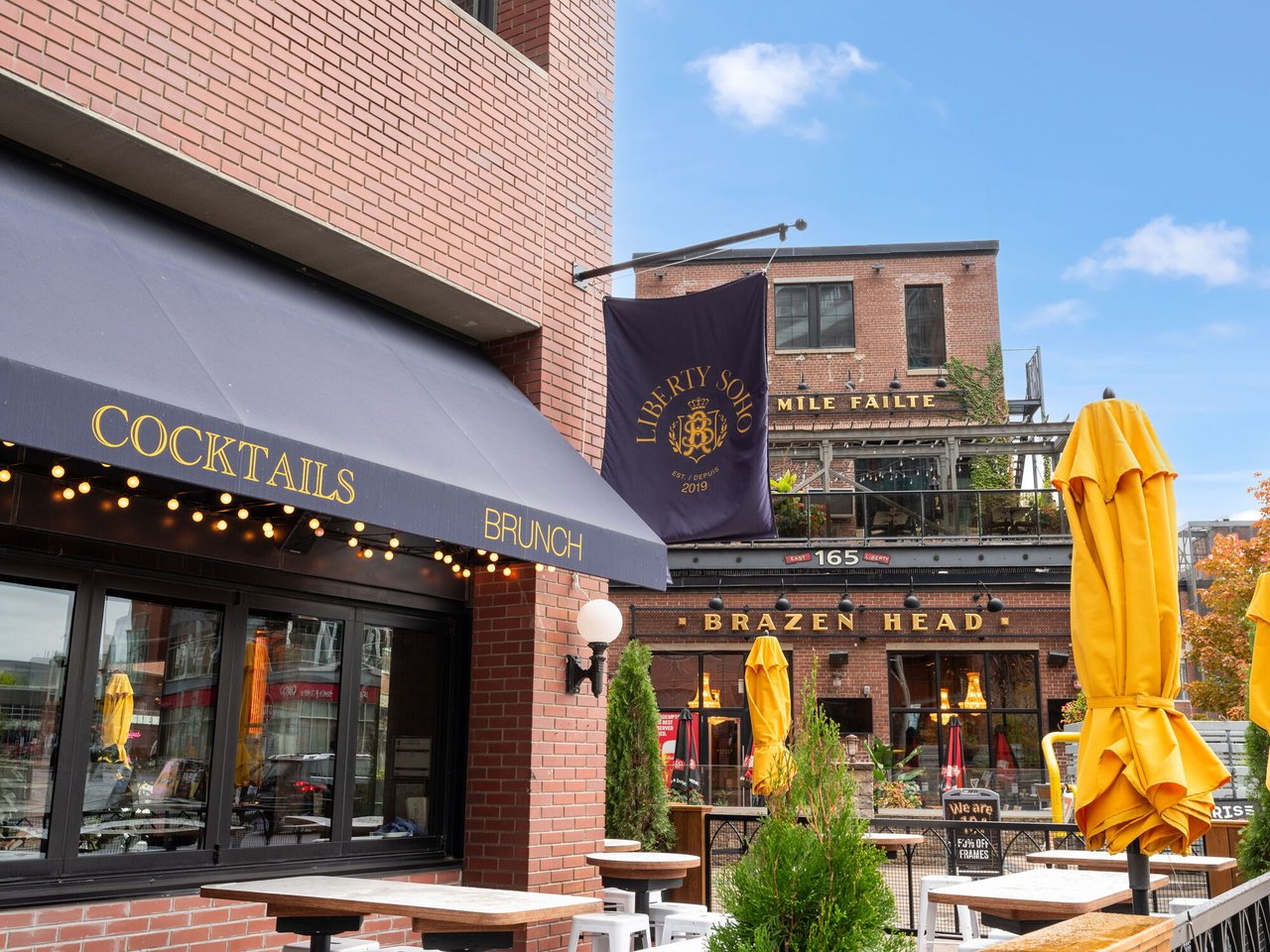
For a month, residents of Liberty Village, Fort York and the Exhibition district lived with local-traffic-only streets, converted permit parking, and construction pauses, including a halt to Ontario Line hauling on match days. The neighbourhood absorbed it with more grace than the pessimists predicted, and since the final whistle, the reopening has been quick: community spaces at Garrison Common, The Bentway and Fort York came back at the start of August, and Ontario Line construction is back at full pace.
Here's what the World Cup weeks actually demonstrated about the waterfront: the transit spine works. When driving became impossible, GO, streetcars and the trail network moved hundreds of thousands of people without the neighbourhood seizing up, and that's the infrastructure buyers are quietly betting on when they purchase near Exhibition, Liberty Village or Humber Bay. Global events come and go. The transit that carried one holds its value every ordinary Tuesday after.
Curious what the post-tournament waterfront market looks like? Get in touch, we watch these pockets daily.
Dave Dubbin
Real Estate Expert
Dave Dubbin & Associates
Real Estate Broker for Etobicoke and Toronto
Sotheby's International Realty, Canada
Stay up to date on the latest real estate trends.
Buyer Advice
Market Insight

Buyer Advice
Community Feature

Market Insight

Market Insight

Buyer Advice
Buyer Advice

Market Insight

DAVE DUBBIN & ASSOCIATES
3109 BLOOR ST W #1 TORONTO ON M8X 1E2 CANADA