Etobicoke's New Condo Pipeline, Mapped
Market Insight Dave Dubbin August 28, 2026
Market Insight Dave Dubbin August 28, 2026
Four master plans across Etobicoke hold roughly 22,000 approved or proposed homes. Two of them are the largest redevelopment sites in the west end by a wide margin. Almost none of it is under construction. That gap between what is entitled and what is rising is the single most useful thing an Etobicoke owner or buyer can understand right now, because an approval is permission to build, not a promise to build, and in 2026 developers are sitting on permission and waiting.
Trying to work out how a nearby project affects your street? Start with our Etobicoke neighbourhood guides here.
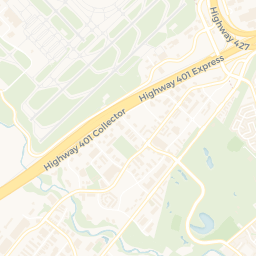
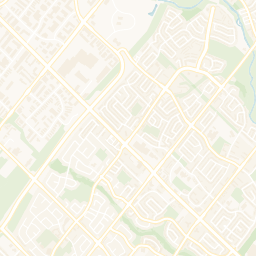
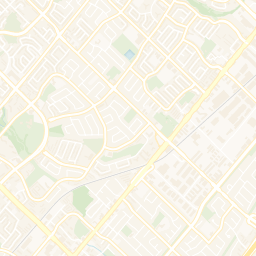
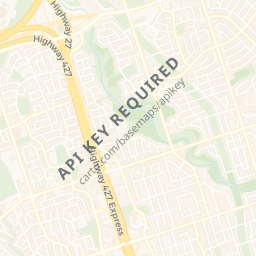
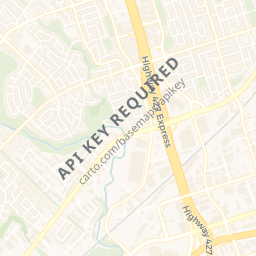
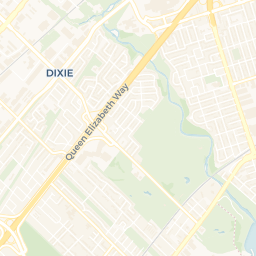
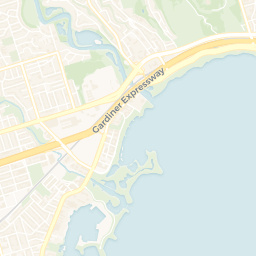
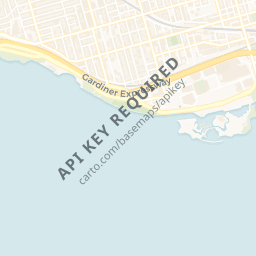
Map data © OpenStreetMap contributors, tiles © CARTO. Marker positions geocoded from the site addresses.
They form a rough arc around the borough. Number one is on the lake at Park Lawn. Two and three sit at the southwest and west edges near the 427. Four is inland at Bloor and Kipling, on top of a subway station.
Site | Address | Homes | Stage |
|---|---|---|---|
1. 2150 Lake Shore | 2150 Lake Shore Blvd W | ~7,500 | Approved master plan, six phases, 28 acres |
2. CF Sherway Gardens | 25 The West Mall | ~6,200 | Proposed, 15 buildings of 17 to 45 storeys, secondary plan under appeal |
3. Cloverdale Mall | 250 The East Mall | 5,500+ | Master plan adopted by Council February 4, 2026, 10 towers of 25 to 41 storeys |
4. Bloor-Kipling (Six Points) | Bloor St W at Kipling Ave | ~2,700 | Under construction, ~900 affordable rental, 17.91 acres of City land |
Total | ~21,900 |
Sources: City of Toronto and Etobicoke York Community Council decisions, CreateTO project pages, and the planning consultants of record for each master plan. Unit counts are as approved or as proposed and are subject to change through phasing.
Here is the part that gets skipped. A zoning approval is an option, in the strict financial sense. The developer has bought the right, not the obligation, to build a certain amount of floor area on that land. They will exercise it when the expected revenue from presales comfortably clears construction cost, financing cost and the return their capital partner demands. Until then the rational move is to hold the entitlement and wait, because an option that is out of the money today is still worth something tomorrow.
In 2026 those options are, for the most part, out of the money. Urbanation reported that the Greater Toronto and Hamilton Area saw zero new condo projects launched in the first quarter of the year, the first time that has happened in decades. Q2 brought three launches totalling 891 units, and new condo sales of 702 units, which was up 52% from a very low base a year earlier but still roughly 86% below the ten year average for a second quarter. Nearly all of the improvement came from selling finished units, including bulk sales to investment groups. Pre-construction sales themselves fell about 80% year over year.
CMHC's summer update expects national housing starts to fall 6.8% in 2026 to 241,400 units, with condominium starts weakest in Toronto specifically.
If you want one concrete example of the gap between permission and shovels, look at the Triangle Site next to Cloverdale Mall. It had zoning approval in 2024 and was marketed as The Clove, a joint venture with a large homebuilder. It was cancelled in the fall after eleven months of market exposure. The land did not disappear, the approval did not disappear, and the parcel is now back with QuadReal alone. The project simply could not clear the hurdle rate, which is the minimum return a developer needs before committing capital, and so it did not proceed.
Cancellation is not failure of a neighbourhood. It is price discovery, the market working out what something is actually worth by testing it against real buyers. It just happens in public and it looks alarming when it does.
If this is your part of Etobicoke, these three go deeper:
Bloor-Kipling. The City demolished the old Six Points interchange, which unlocked about 18 acres of publicly owned land, and the reconfiguration was completed in May 2026. Block 1 at 5207 Dundas Street West is under construction and will deliver 725 rental homes, 218 of them affordable. Block 3 at 3725 Bloor Street West is planned for roughly 698 rental homes with 30 percent affordable. The new Etobicoke Civic Centre is being built on Block 4. The whole site will run on a low carbon district energy plant.
It is worth noticing that the piece moving is the piece with public land and public money behind it, and that most of it is purpose-built rental rather than condominium. That is not a coincidence. Rental economics do not depend on selling 70 percent of a building to individual buyers before a bank will lend, which is the constraint currently jamming the condo pipeline.
The near term read is friendlier than the headline number suggests. Twenty two thousand units on paper sounds like a wall of future competition, and eventually it is. But nothing in that pile competes with your resale listing this fall, and the units that would have competed in 2029 and 2030 are the ones not being launched right now. A pipeline that stalls today produces a supply hole three to four years out.
The nearer pressure is the standing inventory already finished. TRREB counted 8,352 active condo apartment listings across the GTA in July 2026, with 40 days on market and a 97% sale to list ratio. Toronto West condo apartments averaged $616,629 and moved in 37 days. That is your actual competition, and it is measured in weeks, not years.
Two practical implications. First, basis matters more than timing. Basis is just what you paid, and in a flat market it is the only variable you fully control. Buying well now in a building with few competing listings beats guessing the bottom. Second, read the pipeline as a risk map, not a hype map. A completed tower two blocks from a site with 5,500 approved units carries a different long run supply picture than the same tower in a fully built out pocket. Neither is disqualifying. It is a factor you should price rather than ignore.
The counterpoint to the whole optimistic version: if construction costs keep climbing faster than resale prices, some of these approvals never get built at all, and the supply hole thesis stops being about timing and starts being about permanent underbuilding. That would be good for existing owners and rough for anyone hoping affordability improves through supply.
The Bank of Canada decides again on September 2, with the policy rate at 2.25% after six consecutive holds. Toronto's development charge reductions and the federal first time buyer GST rebate on new homes under $1 million both improve project economics at the margin. If presale absorption returns to something near normal, the first of these master plans to move will be whichever one has the cheapest land basis and the most complete servicing, not necessarily the one with the nicest renderings.
If you own near one of these four sites, or you are thinking about buying near one, the question is not whether it gets built. It is what your specific building looks like in five years given what is entitled next door. Book a call and we will pull the applications within walking distance of your address and tell you which ones we would actually worry about. Get in touch here.
Dave Dubbin
Etobicoke Real Estate Expert
Dave Dubbin & Associates
Real Estate Broker for Etobicoke and Toronto
Sotheby’s International Realty, Canada
Stay up to date on the latest real estate trends.
Liberty Villiage
Etobicoke Lifestyle & Community
Liberty Villiage

Buyer Advice
Buyer Advice
Market Insight

Buyer Advice

Community Feature

Market Insight

DAVE DUBBIN & ASSOCIATES
3109 BLOOR ST W #1 TORONTO ON M8X 1E2 CANADA