Condo Reserve Funds: How to Read Them
Buyer Advice Dave Dubbin August 19, 2026
Buyer Advice Dave Dubbin August 19, 2026
You read a reserve fund by comparing three things: what the building has saved, what it is putting away each year, and what the engineer says it will need to spend and when. If the first two are tracking the third, the fund is healthy. If they are not, somebody is going to pay the difference, and if you buy the unit, that somebody is you.
Buying a condo and want a second set of eyes on the status certificate before your condition expires? Send it over. We read a lot of these.
Every condo corporation in Ontario has to collect a reserve fund. That comes from section 93(4) of the Condominium Act, 1998. Section 94(1) then requires the corporation to study, periodically, whether the fund is actually adequate.
The fund pays for major repair and replacement of the common elements and assets. Roof, elevators, garage slab, windows, boilers, balconies. The Condominium Authority of Ontario is blunt about the limit: the reserve fund may not be used for alterations or improvements. So a board cannot raid it to build a new dog wash or redo the lobby in nicer stone. That distinction matters when you are reading minutes and someone is arguing about it.
Think of it as depreciation with a bank account attached. The building is quietly consuming its roof every year whether or not anyone writes a cheque. The reserve fund is the corporation setting aside cash against that consumption in advance, so the bill arrives as a monthly fee rather than a surprise.
Ontario uses three classes of reserve fund study. Knowing which one you are holding tells you how fresh the underlying inspection is.
Class | What it involves | Timing |
|---|---|---|
Class 1 | Comprehensive study | Within a year of the corporation's registration |
Class 2 | Updated study with a site inspection | Three years or less after a Class 3 |
Class 3 | Updated study without a site inspection | Three years or less after a Class 1 or Class 2 |
Source: Condominium Authority of Ontario, Guide on Condo Reserve Funds. Who may conduct a study is set out in section 32 of O. Reg. 48/01.
Why you care: a Class 3 is a desk update. Nobody climbed onto the roof. If the most recent study is a Class 3 and the building is at the age where things start failing, the numbers in front of you are an extrapolation, not an observation.
Most people open a status certificate, see a reserve balance with a comma in it, decide it sounds like a lot of money, and move on. A balance on its own tells you almost nothing. Here is the comparison that does.
What to find | Building A | Building B |
|---|---|---|
Current reserve balance | $1,400,000 | $1,400,000 |
Balance the study said it should have by now | $1,300,000 | $2,600,000 |
Annual contribution | $310,000 | $180,000 |
Contribution increase the study calls for | 3% a year | 14% a year for six years |
Largest item in the next 10 years | Roof, year 8, $420,000 | Garage slab, year 3, $2,100,000 |
Read | Funded ahead of plan, gentle increases, big item far out | Half funded, steep catch-up required, big item close |
Illustrative example. The figures are made up to show the comparison, not drawn from any real corporation.
Same balance. Completely different buildings. Building B is not necessarily a disaster, but its future fees are already spoken for, and a garage slab three years out with half the money in hand is how special assessments happen.
If you are working through condo documents, these three go with this one:
The CAO flags specific physical characteristics as higher risk for reserve planning. If the building has them, expect a larger fund requirement and be less forgiving of underfunding:
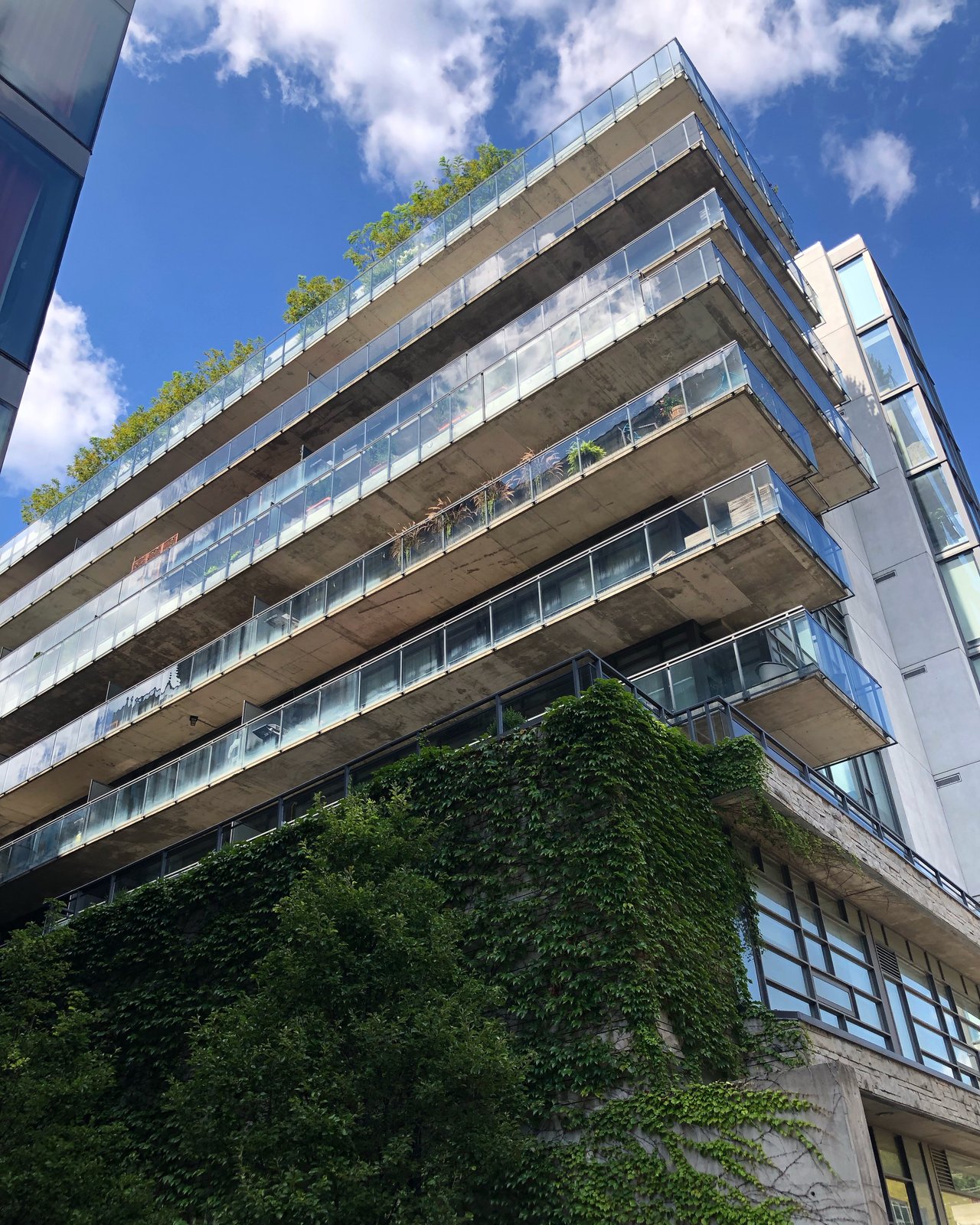
The suspended slab is the one that catches people. If there is landscaping or a driveway sitting on top of the underground garage, there is waterproofing membrane under it, and replacing that membrane means excavating whatever is on top. It is one of the most expensive things a mid-rise can face.
The status certificate is the delivery mechanism. Under section 76 of the Act it includes a statement on the most recent reserve fund study and the state of the reserve fund, plus the current budget, the last audited financial statements, any special assessments charged since the current budget, and any outstanding judgments or ongoing litigation.
Two practical details. A corporation can charge up to $100 including all applicable taxes for it, and it has to provide it within 10 days. That charge cap is in subsection 18(4) of O. Reg. 48/01. Between certificates, owners get Periodic Information Certificates at least twice a year, which include the reserve fund balance and contributions.
One more reason to have a lawyer read it rather than skimming it yourself. A 2023 Superior Court of Justice decision found an owner exempt from their share of a special assessment because it was not clearly noted in the status certificate. What is written in that document binds the corporation. What is missing from it can too.
A big reserve is not automatically a good sign. A board can build a large fund by keeping fees high and deferring work, and you can end up paying premium fees into a building that still has an aging roof. Look at what has actually been done, not just what has been banked.
Underfunded is not automatically fatal either. A newer building three years past registration is supposed to be light on reserves; it has not had time to accumulate. A 40 year old building with the same ratio is telling you something very different. Age of the corporation changes the reading completely.
And the studies are forecasts. They assume inflation rates, interest earned on the fund, and component lifespans. Construction costs over the last several years have made a lot of older forecasts look optimistic. If the study predates the recent run in building costs, treat its numbers as a floor rather than an estimate.
What would change our read on a building: a fresh Class 2 study with a site inspection, a board that has already started the contribution increases rather than planning to, and minutes that show the big-ticket work being tendered rather than discussed.
Thinking about buying, or wondering what your own unit is worth in this market? Start with a free home valuation, or reach out and we will walk through the documents with you.
Dave Dubbin
Real Estate Expert
Dave Dubbin & Associates
Real Estate Broker for Etobicoke and Toronto
Sotheby's International Realty, Canada
Stay up to date on the latest real estate trends.

Buyer Advice

Community Feature

Market Insight

Market Insight

Buyer Advice
Buyer Advice

Market Insight

Market Insight
Community Feature

DAVE DUBBIN & ASSOCIATES
3109 BLOOR ST W #1 TORONTO ON M8X 1E2 CANADA