Appraisal Gaps: What Happens When the Bank's Number Is Not Yours
Buyer Advice Dave Dubbin August 20, 2026
Buyer Advice Dave Dubbin August 20, 2026
An appraisal gap is the difference between what you agreed to pay and what the lender's appraiser says the property is worth. It matters because your lender does not lend against your purchase price. It lends against the lower of the price and the appraised value, and if those two numbers disagree, you cover the difference in cash on closing day.
That is the whole idea. The rest of this post is what it costs, why it is happening more often in this market, and what you can actually do about it.
Not sure what your place would appraise for today? Get a home valuation and we will walk you through the comparables we used.
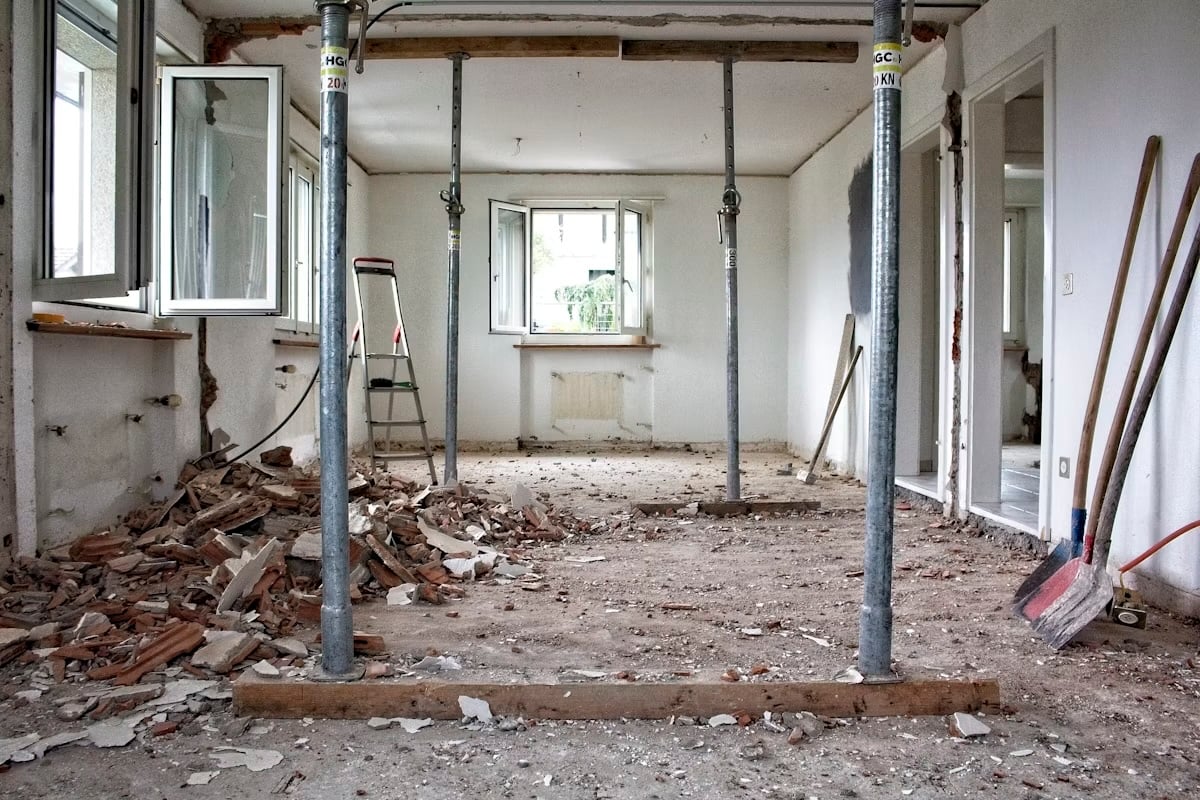
Photo: Unsplash
Every mortgage is sized by loan to value, which is just the share of the property's value the lender is willing to finance. On an uninsured mortgage that ceiling is 80 percent. The part people miss is the word "value." The lender applies that percentage to the lesser of your purchase price and the appraised value, not to whichever number you prefer.
So the shortfall never lands on the bank. It lands on your down payment.
Example A: 20 percent down, appraisal comes in $40,000 low | |
|---|---|
Purchase price | $800,000 |
Down payment you planned (20%) | $160,000 |
Mortgage you expected | $640,000 |
Appraised value | $760,000 |
Maximum the lender will advance (80% of $760,000) | $608,000 |
Cash you now need at closing | $192,000 |
The appraisal gap | $32,000 |
Read that last line carefully. The appraisal came in 5 percent below the price, and your cash requirement went up by $32,000, or 20 percent more down payment than you budgeted. That leverage cuts both ways, and here it is cutting the wrong way. In plain terms: because the bank is funding four fifths of the deal, every dollar of lost value costs you eighty cents of borrowing power and you have to make it up yourself.
On an insured mortgage the same principle applies, and the smaller cushion makes it bite faster.
Example B: minimum down payment, appraisal comes in $25,000 low | |
|---|---|
Purchase price | $650,000 |
Minimum down payment (5% of first $500,000 plus 10% of the rest) | $40,000 |
Insured mortgage you expected | $610,000 |
Appraised value | $625,000 |
Down payment required against $625,000 | $37,500 |
Maximum the lender will advance | $587,500 |
Cash you now need at closing | $62,500 |
The appraisal gap | $22,500 |
A $25,000 miss on value turned into a $22,500 cash call. For a buyer who scraped together the minimum, that is usually the end of the deal rather than an inconvenience.
If you are running the numbers on a purchase, these three go with this one:
An appraiser looks backwards. The core method is comparing recent sales of similar properties, adjusted for differences. In a market where values are falling, the comparable sales that closed sixty or ninety days ago happened at higher prices than today's, and a careful appraiser discounts them. In a rising market the same lag works in your favour and nobody notices.
Two things stand out in those numbers. First, the declines are real but moderate at the aggregate level. Second, the segment matters more than the headline. The apartment benchmark, which is the price of a consistent condo rather than an average of whatever happened to sell, is down 7.35 percent year over year while the condo average price is down only 2.3 percent. That spread tells you the mix of what sold shifted toward larger and more expensive units, and it is the benchmark, not the average, that better reflects what an appraiser is working with.
Where this shows up most: condo apartments, and above all preconstruction closings, where the price was agreed years ago and the appraisal happens today. If you signed in 2021 or 2022 and you are closing now, run this math before your lawyer calls you.
Worth saying, because it saves a lot of unnecessary worry. On straightforward low ratio deals many lenders skip the physical appraisal and use an automated valuation model, which is a statistical estimate built from sales data. Full appraisals get ordered more often when the property is unusual, when the loan to value is high, when the purchase price looks out of step with the neighbourhood, or when the lender simply wants eyes on it.
Insured mortgages run through the insurer's own valuation process as well. Your mortgage professional will know which path your file is on. Ask early, not after the offer is firm.
The market is tightening, and appraisal gaps shrink when prices stop falling. In July 2026 the GTA sales to new listings ratio rose to 41.4 percent from 34.6 percent a year earlier, mostly because sellers stopped listing rather than because buyers surged. Nationally, CREA reported on August 18 that sales rose 0.5 percent from June, a fourth straight monthly gain. The Bank of Canada has held its policy rate at 2.25 percent through six consecutive decisions, with the next one on September 2.
If prices flatten, the backward looking appraisal stops working against you within a quarter or two. The argument on the other side is that appraisal risk follows the benchmark, not the sentiment, and the apartment benchmark is still down more than 7 percent year over year. Rates moving higher, or new listings returning in the fall, would push this back the other way.
Figures cited are from TRREB Market Watch for July 2026 and CREA's national release of August 18, 2026, accurate as of August 20, 2026. We are real estate brokers, not lenders, appraisers or mortgage brokers. Talk to your mortgage professional about how your specific file will be valued.
Want a second opinion on what a property is really worth before you write the offer? Get in touch. We will pull the comparables and tell you what we see.
Dave Dubbin
Real Estate Expert
Dave Dubbin & Associates
Real Estate Broker for Etobicoke and Toronto
Sotheby's International Realty, Canada
Stay up to date on the latest real estate trends.
Liberty Villiage
Etobicoke Lifestyle & Community
Liberty Villiage

Buyer Advice
Buyer Advice
Market Insight

Buyer Advice

Community Feature

Market Insight

DAVE DUBBIN & ASSOCIATES
3109 BLOOR ST W #1 TORONTO ON M8X 1E2 CANADA