Ontario Set the 2027 Rent Increase Guideline at 1.9 Percent. Now What?
Market Insight Dave Dubbin July 30, 2026
Market Insight Dave Dubbin July 30, 2026
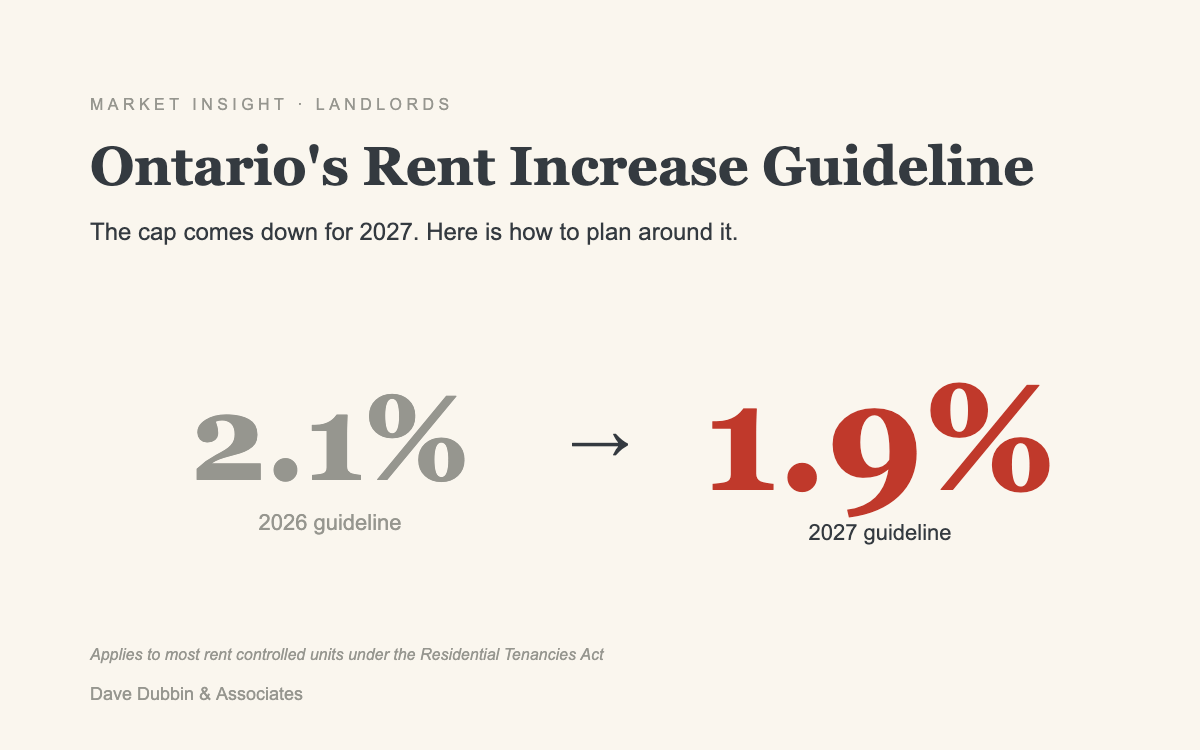
Ontario has set the rent increase guideline for 2027 at 1.9 percent, down from 2.1 percent this year. For most tenancies, that is the maximum a landlord can raise the rent next year without applying to the Landlord and Tenant Board. If you own a rental in Etobicoke or Liberty Village, the number itself is the easy part. The planning around it is where landlords earn their keep, so let's walk through both.
Own a rental in the west end? Our Landlord's Guide covers the paperwork end to end, and we are happy to talk through your specific unit.
The guideline applies to most rent controlled units under the Residential Tenancies Act, which generally means homes first occupied as rentals on or before November 15, 2018. It caps increases taking effect between January 1 and December 31, 2027. A few ground rules travel with it: rent can only go up once every 12 months, tenants must get at least 90 days written notice on the proper form, and anything above the guideline needs Landlord and Tenant Board approval. Units first occupied after that November 2018 date are not capped by the guideline, which matters a lot in newer buildings, and less than landlords sometimes hope, for reasons we will get to.
The guideline tracks inflation, so a calmer inflation year produces a smaller cap. It also lands in a rental market that has been cooling on its own. CMHC's mid-year rental update points to rising vacancy in Toronto and slowing growth in asking rents, which matches what we have been seeing in west end listings all year. In plainer terms, the legal ceiling is coming down at the same time the market ceiling is coming down, and for plenty of units the market is now the tighter of the two.
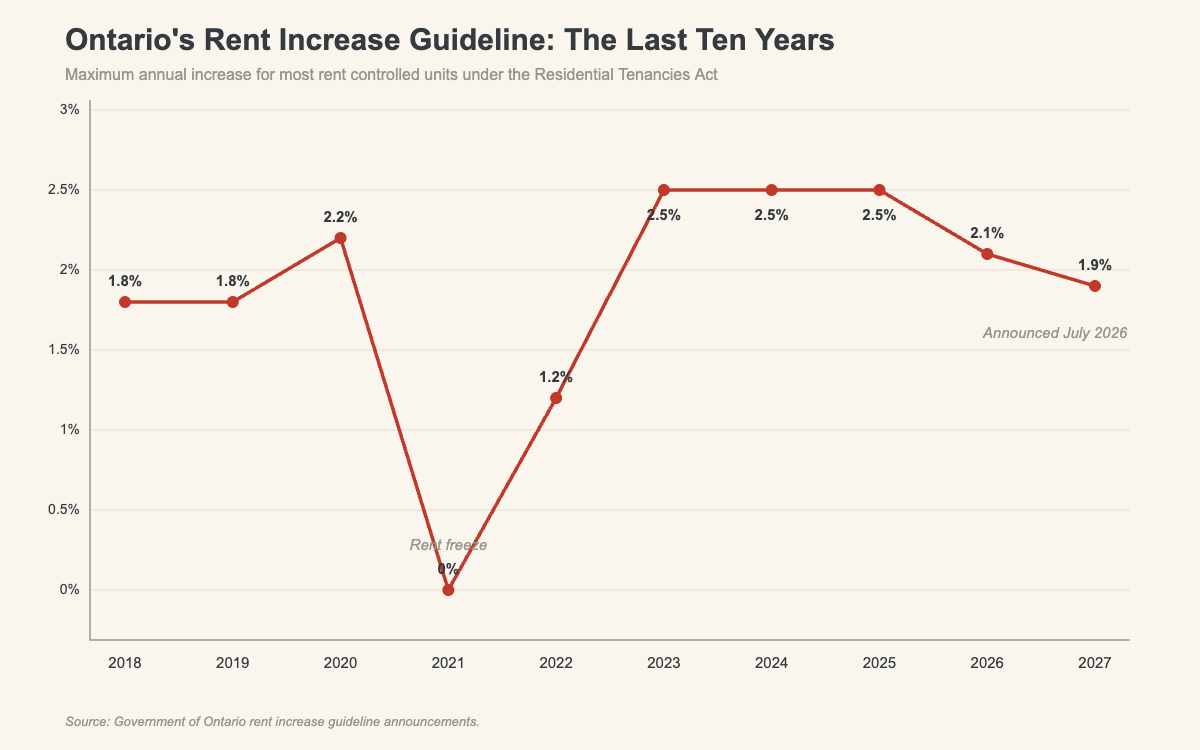
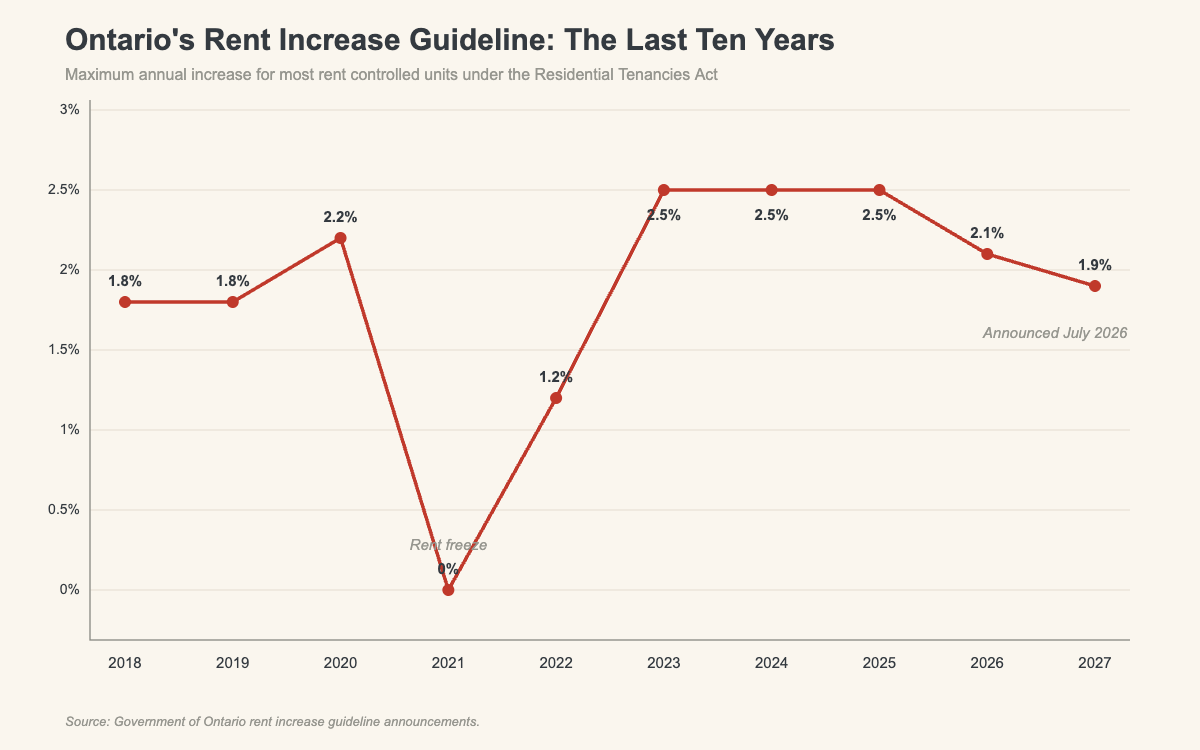
For context, here is the guideline's path over the last ten years. The 2027 number is on the low end of the range, though the pandemic freeze in 2021 remains the outlier.
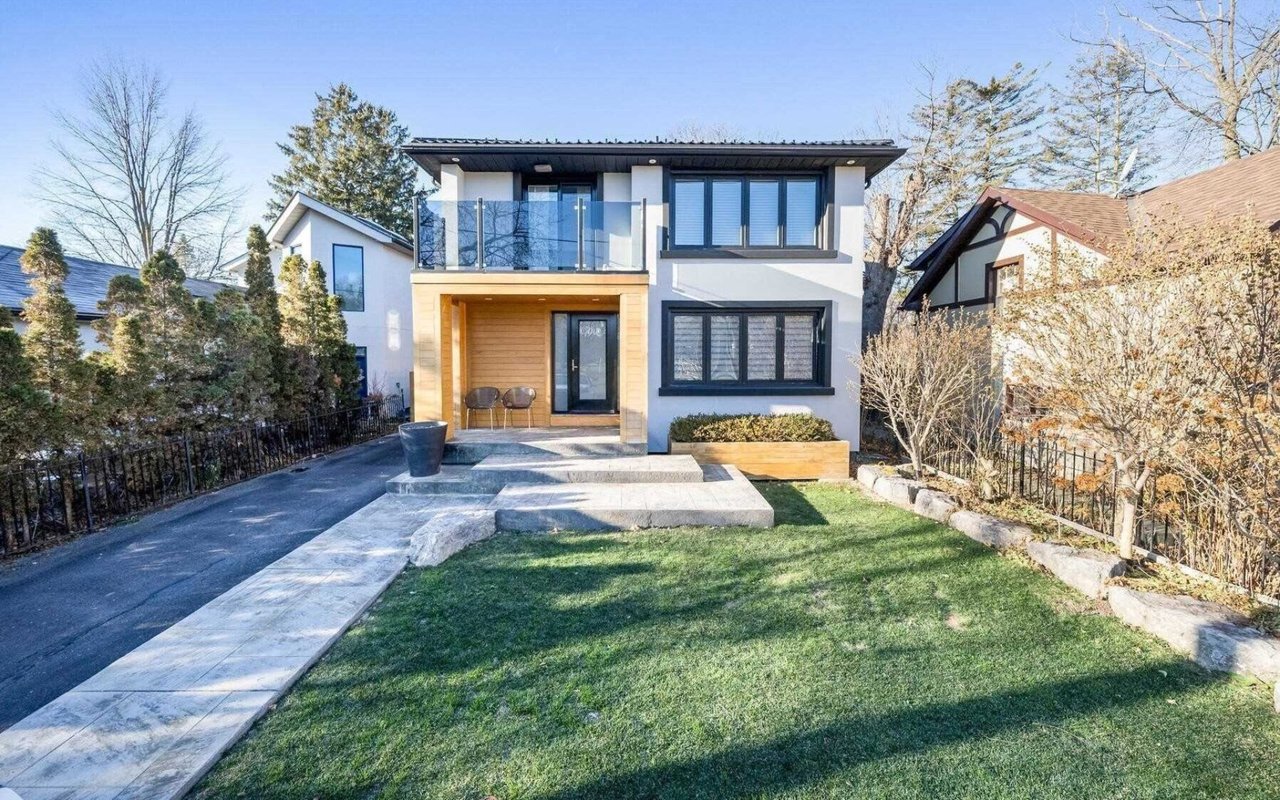
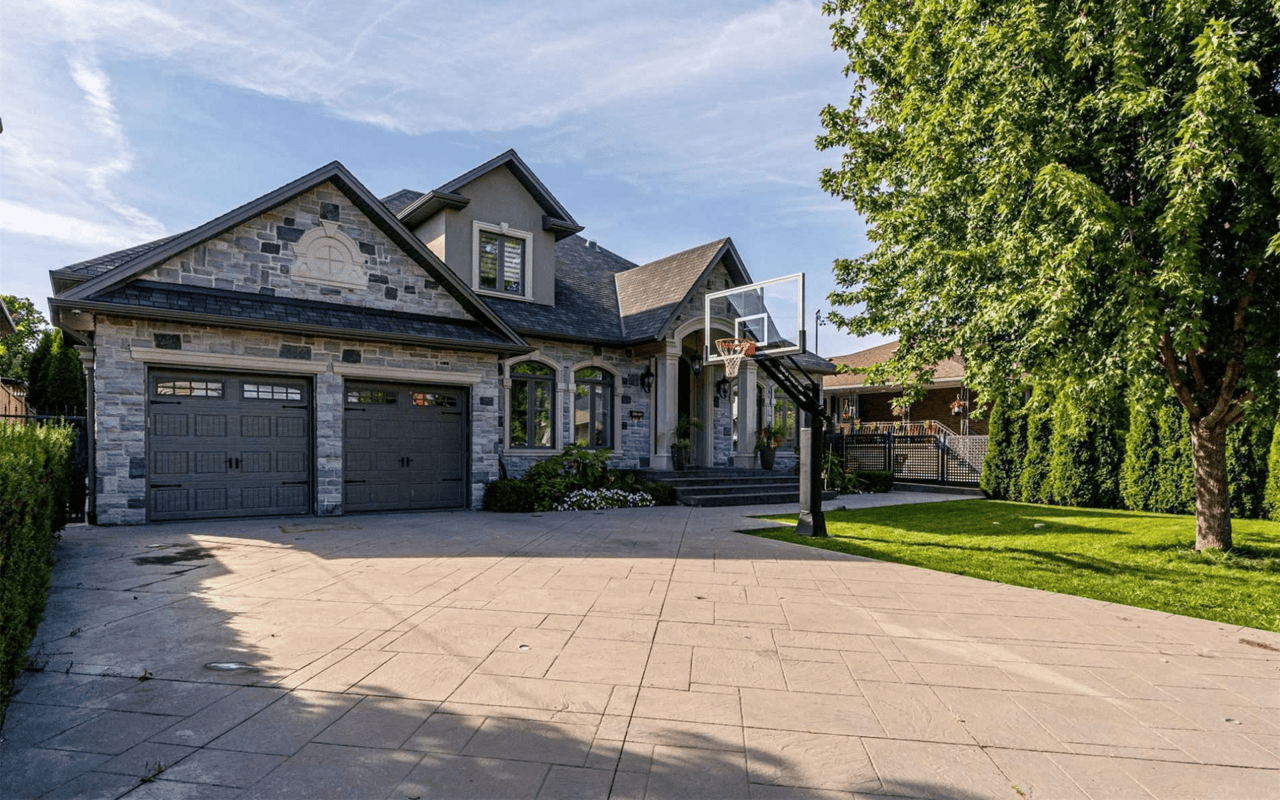
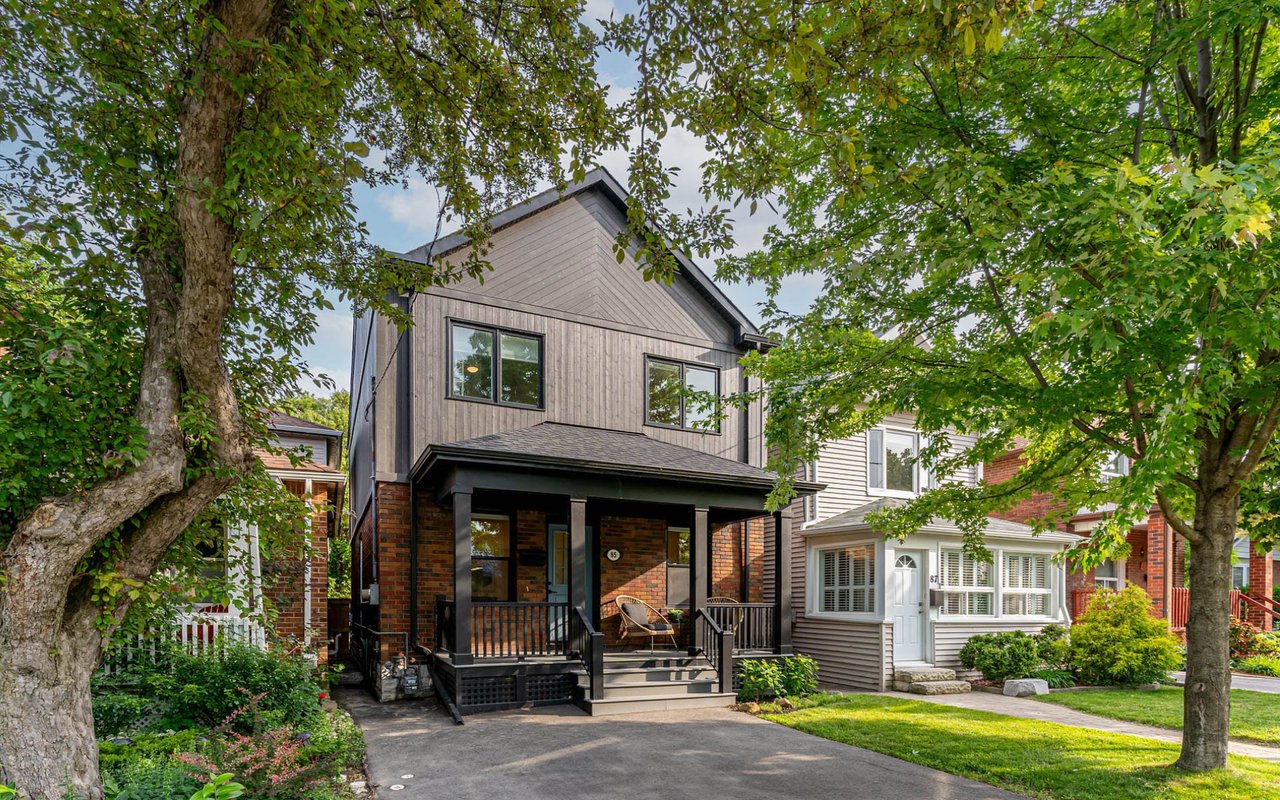
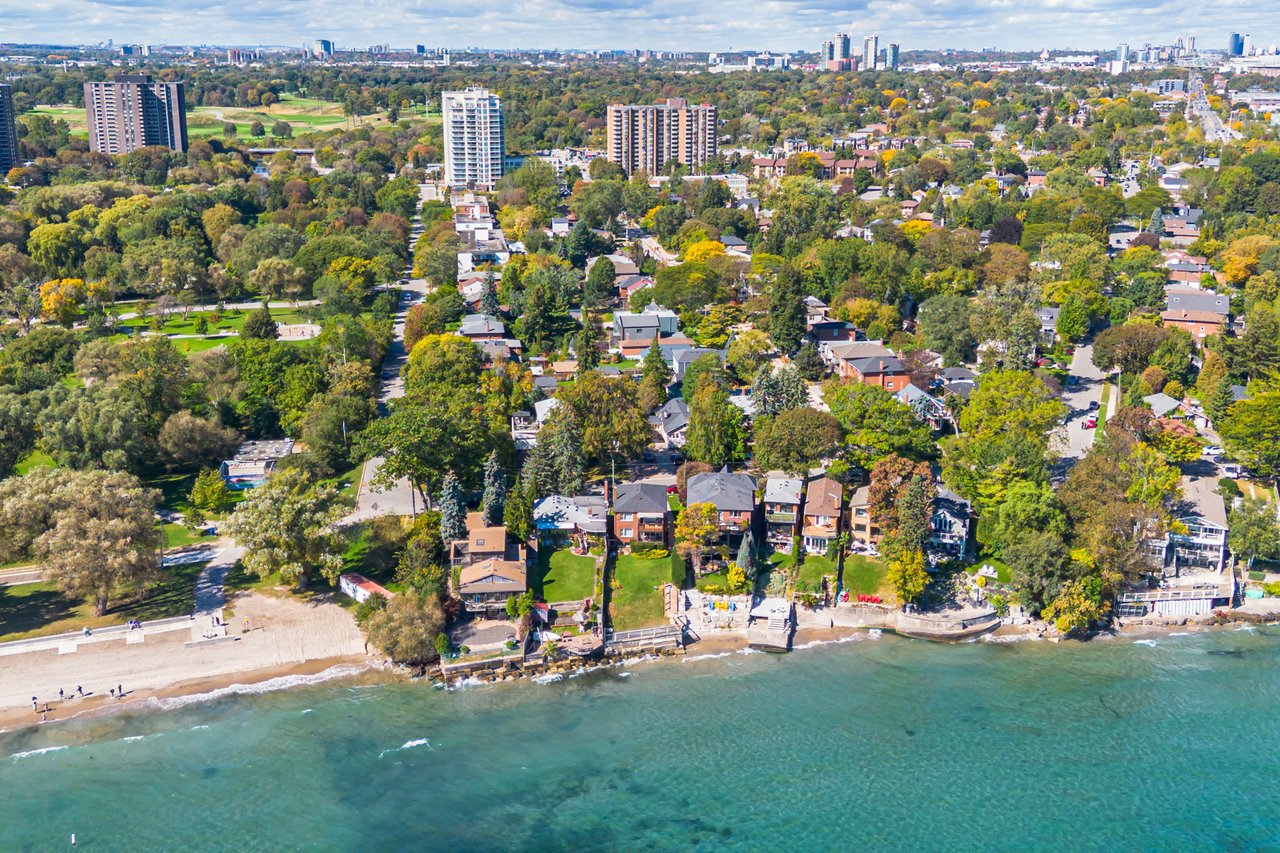
Etobicoke rentals are a mixed bag: basement suites under bungalows, whole houses, and a wall of condos at Humber Bay Shores. Older units carry the 1.9 percent cap. Many newer condo units do not, but try advertising a big increase to a tenant who can see three similar units listed cheaper in the same building. Exempt does not mean immune. Our advice this year has been consistent: know what your unit would actually fetch vacant before deciding anything, because for a lot of owners the real answer is that the sitting tenant is already at or above market.
If you own a rental here, these three are worth your time:
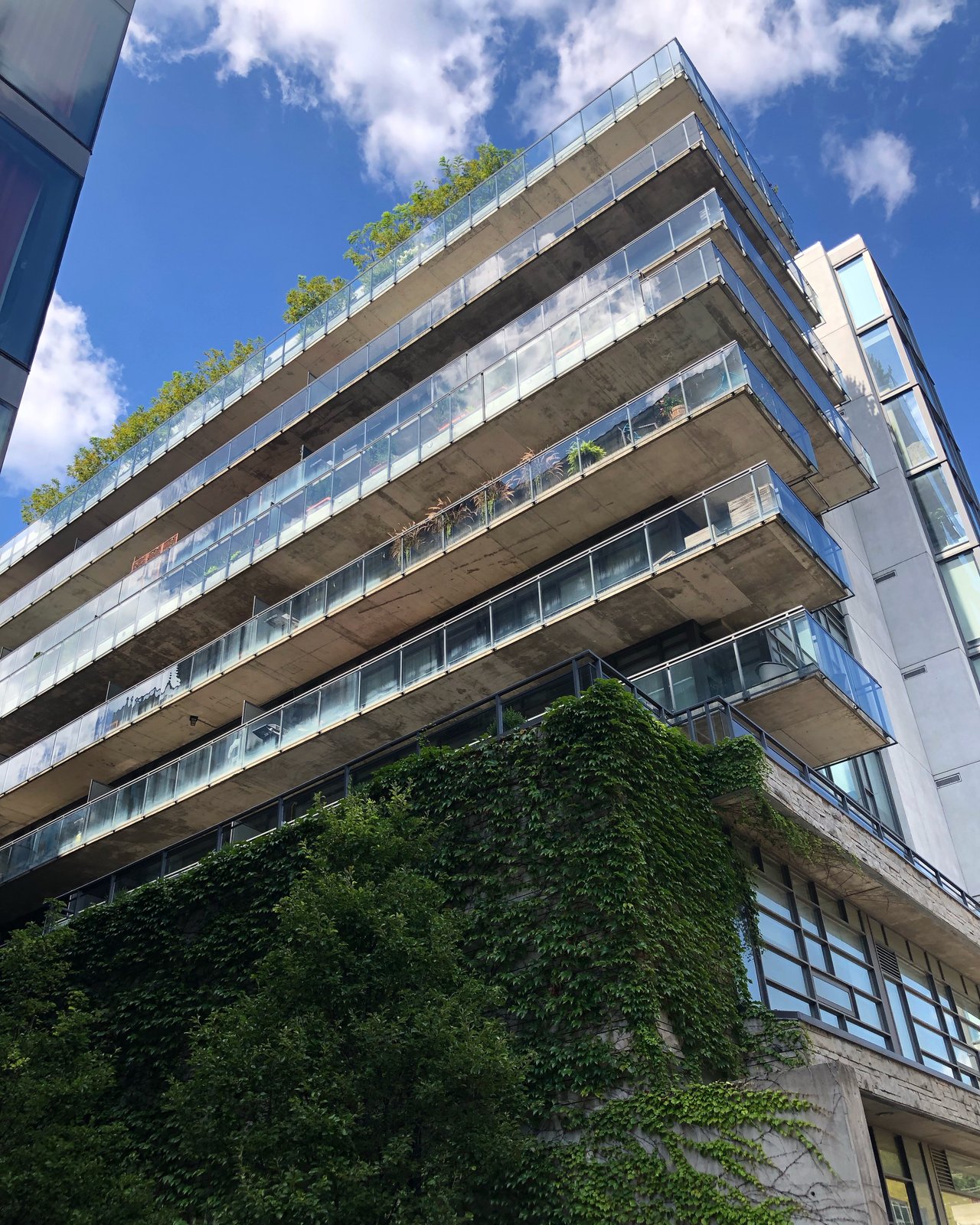
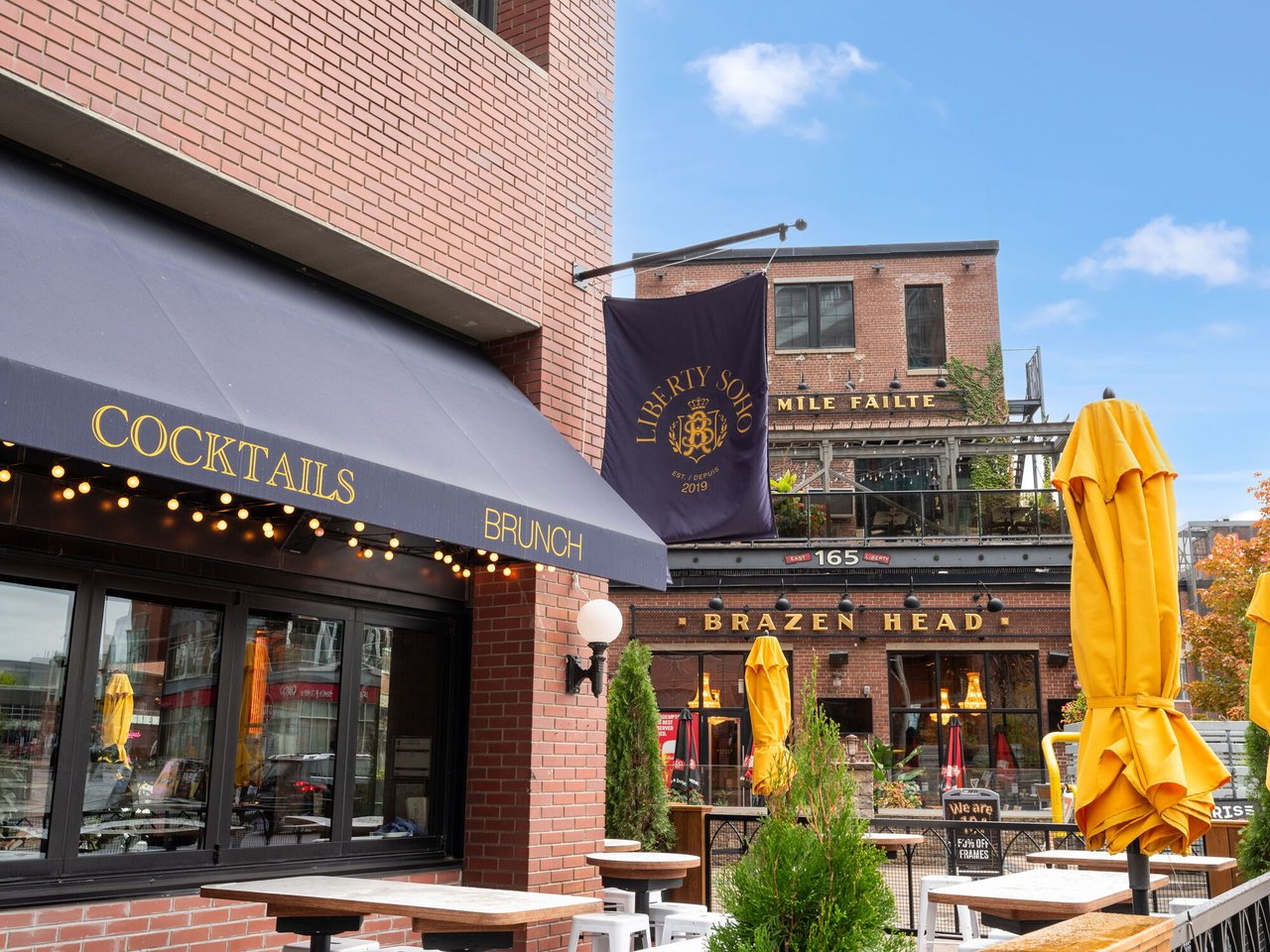
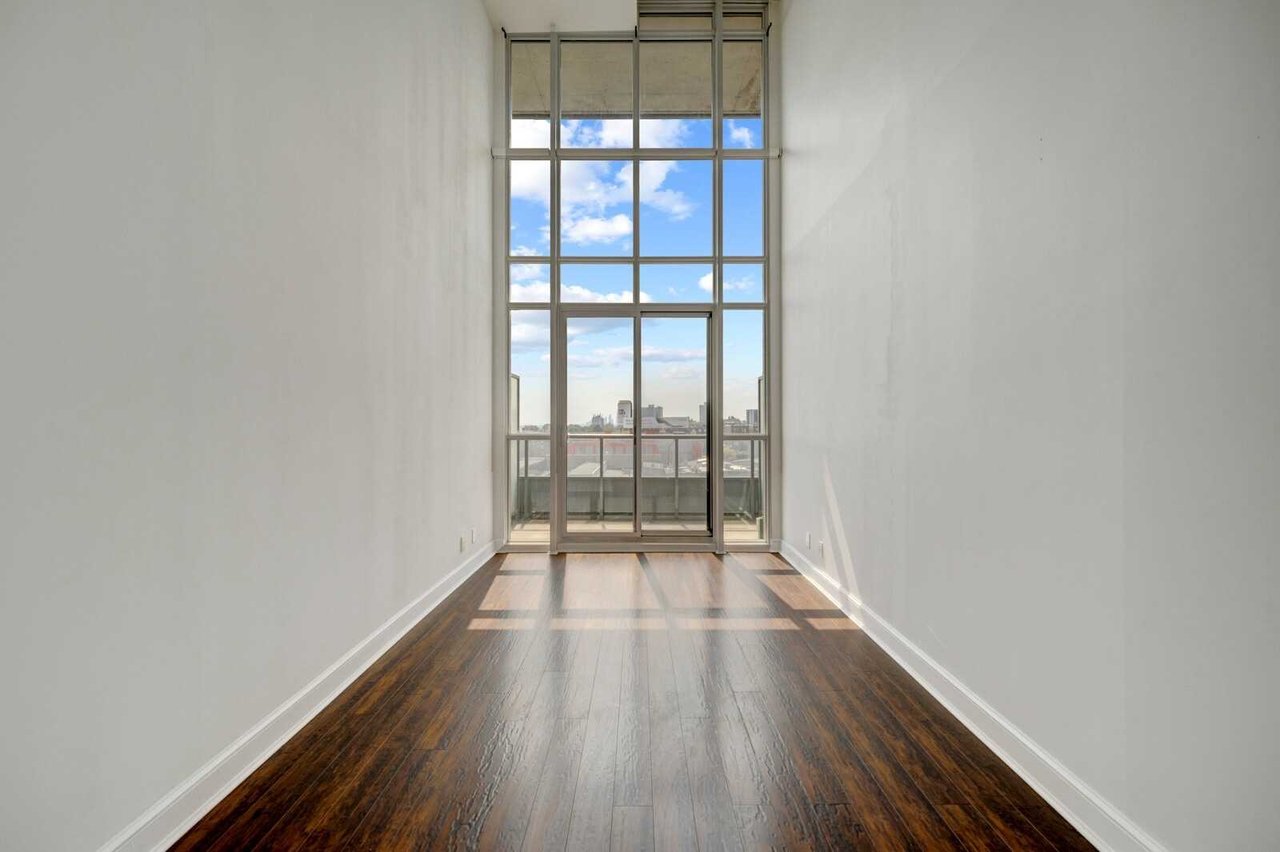
Most Liberty Village condo buildings went up well before November 2018, so the majority of units there are capped at the guideline. With asking rents in the neighbourhood softer than they were a year ago, the 1.9 percent question is often academic anyway. The real decision for Liberty Village landlords is retention. A good tenant who pays on time is worth more than a month of vacancy plus releasing costs, and in this market a turnover can easily mean re-renting at less than the sitting tenant pays now.
A valid increase needs the proper form, at least 90 days notice, and 12 months since your last increase. For a capped unit in 2027 it cannot exceed 1.9 percent without a Landlord and Tenant Board order. If your building first had tenants after November 15, 2018, the cap does not apply to you, but the same soft market that limits landlords gives you negotiating room. It costs nothing to ask, especially at renewal time.
Our short list for west end landlords going into 2027: budget with 1.9 percent, not wishful thinking. Prioritize keeping the tenants you would miss. Put the increase notice in your calendar 90 days ahead of the date you want. And keep one eye on the rule changes arriving September 21 this year, because the paperwork side of being a landlord in Ontario keeps evolving. None of this is complicated on its own. It just punishes the disorganized.
Not sure whether to hold the unit, re-rent it, or sell it? Reach out and we will run the numbers with you, no pressure.
Dave Dubbin
Real Estate Expert
Dave Dubbin & Associates
Real Estate Broker for Etobicoke and Toronto
Sotheby's International Realty, Canada
Stay up to date on the latest real estate trends.
Liberty Villiage
Etobicoke Lifestyle & Community
Liberty Villiage

Buyer Advice
Buyer Advice
Market Insight

Buyer Advice

Community Feature

Market Insight

DAVE DUBBIN & ASSOCIATES
3109 BLOOR ST W #1 TORONTO ON M8X 1E2 CANADA