Canada’s Foreign Buyer Ban: What It Did, When It Ends, and What Comes Next
Market Insight Dave Dubbin August 17, 2026
Market Insight Dave Dubbin August 17, 2026
The ban has been in force since January 1, 2023, so about three years and seven months as of today. It expires January 1, 2027, which is roughly four and a half months away. Foreign buyers were never a large share of this market to begin with, somewhere in the range of two to three percent of Ontario's residential properties, though the share was noticeably higher for condos. And the most likely outcome in 2027 is not a clean return to the old rules. Ottawa has signalled interest in the Australian approach, where foreign money is pushed toward new construction and kept away from existing homes.
Wondering how any of this lands on a specific purchase or sale? Get in touch and we will walk you through where you actually stand.
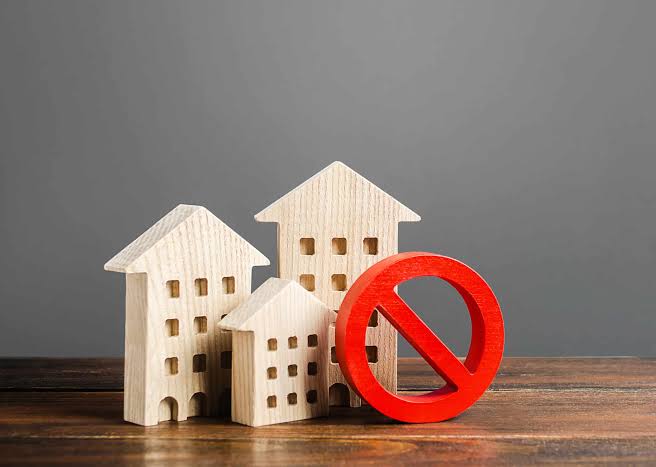
The Prohibition on the Purchase of Residential Property by Non-Canadians Act stops non-Canadians from buying residential property. A non-Canadian means someone who is not a citizen, not a permanent resident, and not registered under the Indian Act, plus private corporations controlled by those people.
The parts people get wrong are the limits:
Penalties are a fine of up to $10,000, and a court can order the property sold. One detail worth knowing: a breach does not void the sale, and on a court-ordered sale the non-Canadian cannot walk away with more than they paid. The point is to remove the profit, not to unwind the transaction.
Date | What happened |
|---|---|
June 23, 2022 | Act receives royal assent as part of the budget bill |
January 1, 2023 | Ban comes into force, originally for two years |
March 27, 2023 | Regulations amended, loosening rules for work permit holders and carving out vacant land and development purchases |
February 4, 2024 | Ottawa announces a two year extension, moving expiry from January 1, 2025 to January 1, 2027 |
January 1, 2027 | Current expiry date |
Dates confirmed against the Justice Laws consolidated Act and CMHC's program page, August 17, 2026.
This is where the conversation usually goes sideways, because two different numbers get mixed together. One is the share of the housing stock owned by non-residents. The other is the share of sales in a given year going to foreign buyers. They are not the same thing, and the stock number is the one that is measured well.
Statistics Canada's Canadian Housing Statistics Program is the source worth trusting here.
Measure | Share owned by non-residents |
|---|---|
All residential properties, Ontario (2020) | 2.2% |
All residential properties, Toronto CMA (2020) | 2.7% |
All residential properties, City of Toronto (2020) | 3.8% |
Condominium apartments, Toronto CMA (May 2017) | 7.2% |
Single-detached houses, Toronto CMA (May 2017) | 2.1% |
Statistics Canada, Canadian Housing Statistics Program. The 2020 figures and the 2017 figures come from different releases with different methods, so read each on its own rather than as a trend line.
The split by property type is the part that matters for anyone who owns a condo. In 2017, condo apartments were about one fifth of all residential properties in the Toronto CMA, but they made up 44 percent of everything non-residents owned. Foreign ownership was never spread evenly across the market. It was concentrated in exactly the product Liberty Village and Humber Bay are built out of.
Worth remembering too that Ontario already had its own tool before the federal ban existed. The Non-Resident Speculation Tax arrived in April 2017 at 15 percent in the Greater Golden Horseshoe, went to 20 percent province-wide in March 2022, and has been 25 percent since October 25, 2022. That tax does not expire with the federal ban.
If policy and its effect on local prices is your thing, these are worth a read:
Prices fell in every full year the ban has been in force. It would be a mistake to hand the ban credit or blame for that. Over the same window the Bank of Canada raised its policy rate to 5 percent and then cut it back to 2.25 percent, the stress test kept qualifying rates high, immigration targets were revised down, and a very large pipeline of pre-construction condos completed into a soft rental market. Any one of those moves more units than a group that owned somewhere around two to three percent of the stock.
The economics term for the trap here is confounding, which just means several causes changed at once and you cannot separate them by looking at the outcome. If you want a rough sense of scale: removing two to three percent of demand from a market matters at the margin, particularly in the segment where that demand was concentrated, but it is not the main event when borrowing costs double.
Three broad paths, and nothing has been legislated as of August 17, 2026.
Australia went the other way on the same problem. On February 16, 2025 the government announced that from April 1, 2025 to March 31, 2027, foreign persons, including temporary residents and foreign-owned companies, cannot buy established dwellings unless an exception applies. What they can still buy is new construction and vacant land, and the Australian Taxation Office was funded to run an audit program targeting land banking, meaning buying land and sitting on it rather than building.
The logic is straightforward. If foreign capital competes with a local family for a house that already exists, it adds nothing to supply and just bids up the price. If the same capital buys a pre-construction unit, it helps get a building financed and built, which adds supply. Same money, different effect, depending on where you point it.
For a market like ours that runs on pre-construction, that distinction is not academic. Toronto's condo pipeline has been struggling to hit the pre-sale thresholds lenders require before construction starts. A rule that lets offshore buyers into new builds while keeping them out of resale would be aimed squarely at that problem.
The argument against is worth stating. Pre-construction investors are also the people who supply most of Toronto's rental condos, and a wave of investor-owned completions is part of why rents have softened and why some owners are underwater on units bought at 2021 prices. Adding foreign demand to pre-construction supports developers and hurts nobody immediately, but it rebuilds the same investor-heavy ownership structure that made this cycle so painful. Australia's ban also has not run long enough to produce good evidence either way, and their own review is due before it ends.
What would change our read: a firm legislative proposal in the fall fiscal update, or Australian evidence showing a measurable effect on established-dwelling prices.
For most people buying or selling in Etobicoke or Liberty Village, the ban has never been the thing that decides your outcome. Rates, supply and what the unit two floors up sold for matter far more. If you are a citizen or permanent resident, none of this applies to you at all.
Where it does matter: if you hold a work permit and are house hunting, check the exception rules carefully with a lawyer before you write an offer, because the 183 day test and the one-property limit are strict and getting it wrong carries a fine and a forced sale. If you are a seller of a downtown or waterfront condo, a 2027 policy change that reopens pre-construction to offshore buyers would affect new supply and, indirectly, your competition. And if you are an owner sitting on a soft valuation, do not price a recovery into your listing based on a policy change that has not been announced.
If you want to talk through what this means for a specific property, reach out. If you are just curious where your place stands right now, start with a home valuation.
Dave Dubbin
Real Estate Expert
Dave Dubbin & Associates
Real Estate Broker for Etobicoke and Toronto
Sotheby's International Realty, Canada
Stay up to date on the latest real estate trends.
Liberty Villiage
Etobicoke Lifestyle & Community
Liberty Villiage

Buyer Advice
Buyer Advice
Market Insight

Buyer Advice
Community Feature

Market Insight

DAVE DUBBIN & ASSOCIATES
3109 BLOOR ST W #1 TORONTO ON M8X 1E2 CANADA