Etobicoke Power of Sale: Opportunity & Risk in Toronto Real Estate.
Market Insight Dave Dubbin March 24, 2026
Market Insight Dave Dubbin March 24, 2026
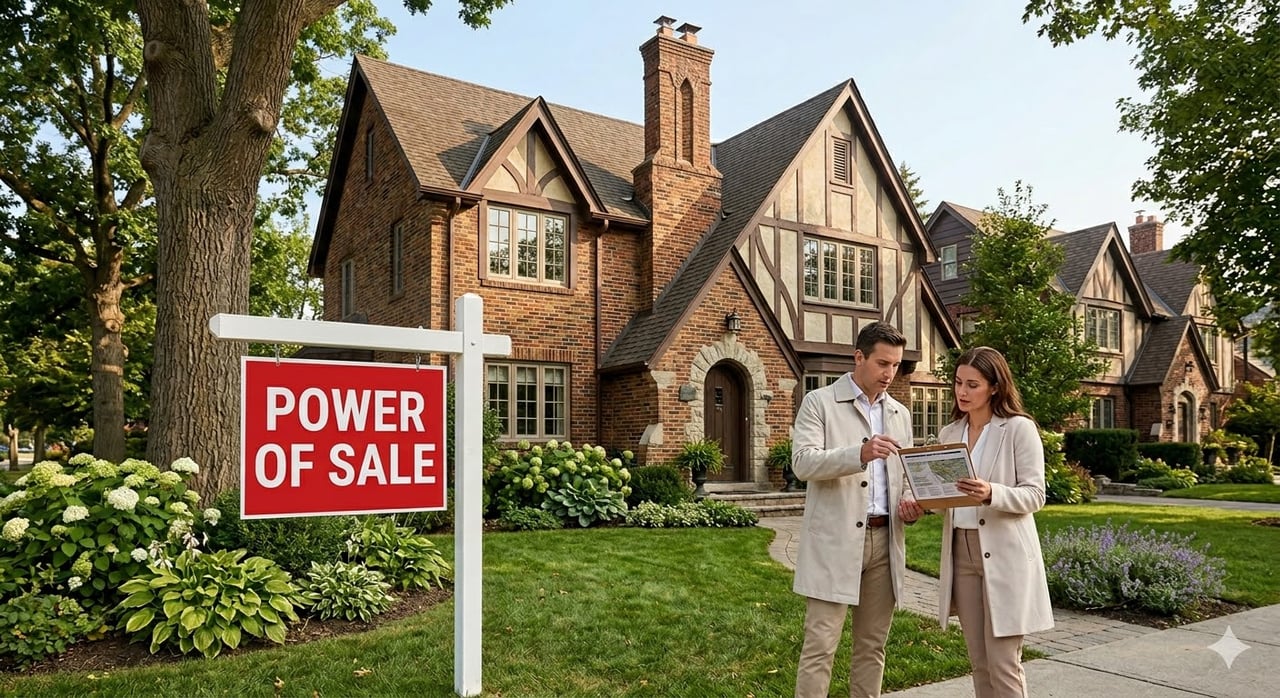
With Power of Sale listings in the Greater Toronto Area recently surging by 59% year-over-year, many prospective buyers are wondering if these distressed properties in Etobicoke are their ticket to a real estate bargain.
While these properties can occasionally present unique opportunities, they are rarely the massive steals portrayed on reality TV. Understanding the strict "as is" conditions, who these properties are actually suited for, and the crucial legal differences from foreclosures is essential before making an offer in today's market.
It is a common misconception to use "Power of Sale" and "foreclosure" interchangeably, but in Ontario, they are entirely distinct legal processes.
In a Power of Sale, the lender forces the sale of the property to recover the outstanding mortgage debt, but the original homeowner remains on title until the transaction closes. Any excess funds from the sale, after debts and fees are paid, are returned to the homeowner. This is the most common method used by lenders in Ontario because it is relatively fast and cost-effective.
In a Foreclosure, the lender takes legal title to the property, becoming the new owner. They keep all proceeds from the sale, even if those proceeds exceed what was owed. Foreclosures are rare in Ontario due to the lengthy, complex court process involved.
The short answer is: not necessarily. If you've watched real estate flipping shows on television, you might assume a distressed sale automatically means a massive discount. In reality, Canadian laws make that highly unlikely.
Under the Mortgages Act of Ontario, lenders have a strict fiduciary duty to sell a Power of Sale property for fair market value. They cannot simply accept a lowball offer to offload the asset quickly. Lenders will typically obtain multiple independent appraisals to justify the list price and protect themselves from being sued by the original owner.
While you might secure the property for slightly under market value due to its condition or the stigma attached to a forced sale, you are highly unlikely to secure a deep discount simply because it is a Power of Sale. Lenders are legally bound to get the best possible price.
Purchasing these properties requires a strategic approach and a clear understanding of the risks involved.
The Pros:
Motivated Seller: The lender wants to recoup their funds and close the file, which can sometimes lead to a more straightforward negotiation on price, provided it aligns with fair market value.
Potential for Equity Building: Many of these homes require cosmetic or structural updates. If you have the capital to renovate, you can force appreciation and build equity quickly in prime Etobicoke neighbourhoods.
The Cons:
"As Is, Where Is" Condition: The lender has never lived in the property and will not provide any warranties regarding its condition, the state of the appliances, or even whether the property will be cleared of debris before closing.
The Right of Redemption: The original homeowner has the right to pay off their mortgage arrears and halt the sale process right up until the property is officially sold. You could have an accepted offer, only to have the deal fall through.
Standard Clauses Altered: Lenders attach extensive schedules to the Agreement of Purchase and Sale that heavily protect their interests, often stripping away standard buyer protections.
Given the complexities, Power of Sale properties are not for everyone. You should consider buying one if:
You are an experienced buyer or investor: You understand the nuances of real estate contracts and are comfortable navigating heavy lender schedules.
You have flexible timelines: If a homeowner exercises their right of redemption and the deal falls through, you need the flexibility to pivot without being left unhoused.
You have strong capital reserves: Because these homes are sold "as is" and often neglected, you will likely need immediate funds for repairs, renovations, and unpredicted maintenance.
You have a high-risk tolerance: You must be willing to take on a property without the typical warranties and representations standard sellers provide.
First-time buyers or those looking for a turnkey family home should approach these properties with extreme caution.
Navigating a Power of Sale in Etobicoke requires a sharp eye for value and a thorough understanding of the legal landscape. While the prospect of an under market value property is enticing, the strict "as is" conditions and rigid lender schedules mean you must proceed with comprehensive due diligence. Partnering with a professional who understands the nuances of these specific transactions is the best way to protect your investment.
Whether you are hunting for an investment property, navigating a Power of Sale, or looking for your next luxury home in Etobicoke, having expert guidance is essential. Set up a time to discuss your real estate needs and strategy with Dave Dubbin at www.bookdave.ca.
Stay up to date on the latest real estate trends.

Liberty Villiage

Everything You Need to Know

Market Insight

Market Insight
What the May TRREB Numbers Mean for Toronto and Etobicoke Buyers and Sellers

Liberty Villiage
Your Guide to FIFA Road Closures and Match-Day Transit

Etobicoke Lifestyle & Community
Getting Ready For Summer: Which Pool System Attracts More Etobicoke Buyers?

Etobicoke Lifestyle & Community
Which Upgrades Actually Add Value in Etobicoke?

Etobicoke Lifestyle & Community
May 2026

Etobicoke Lifestyle & Community
May 2026

DAVE DUBBIN & ASSOCIATES
3109 BLOOR ST W #1 TORONTO ON M8X 1E2 CANADA